

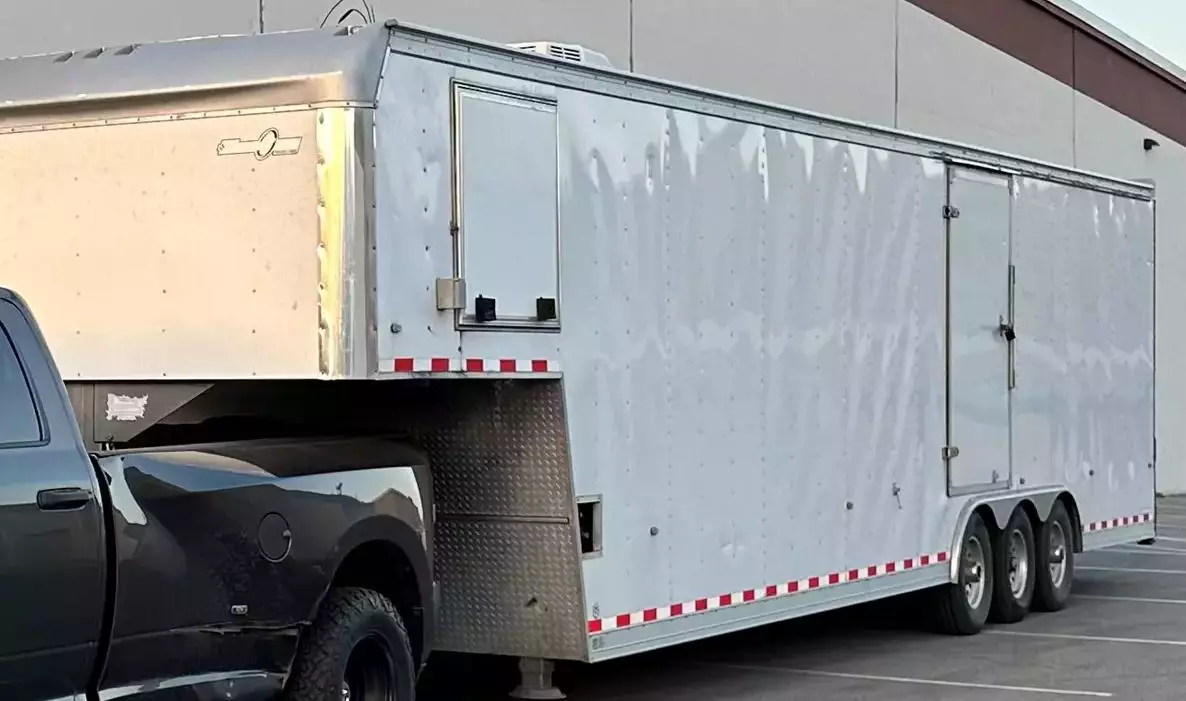
Adapting a 5th-Wheel Hitch to Tow a Gooseneck Cargo Trailer
 Neighbors Trailer
Dec 21, 2023 434 5 min read
If you already tow a fifth-wheel RV with a pickup, you have most of what you need to pull a gooseneck cargo trailer; the missing piece is a 5th-wheel-to-gooseneck adapter. Owners who run both kinds of trailers (a fifth-wheel camper for trips, a gooseneck cargo trailer for projects) often want a single in-bed hitch that does both jobs. This refreshed guide explains when adapting works, when you should not, and the trade-offs you should know before drilling holes or buying parts.
Fifth-Wheel vs. Gooseneck: What Is Actually Different
The two hitches look unrelated, but both mount in the bed of a pickup and put trailer tongue weight directly over the rear axle. The difference is mechanical.
- A fifth-wheel hitch uses a large saddle plate and jaw mechanism that grips a kingpin underneath the trailer. It is built for stability on long RV runs and offers smooth, articulated movement.
- A gooseneck hitch uses a 2-5/16-inch ball mounted flush in the truck bed. The trailer's gooseneck coupler drops over the ball. The footprint is small; the bed stays usable when the ball is flipped over.
Both hitches center load over the rear axle, which is what makes them safer than bumper-pull hitches for heavy trailers. The choice between them usually comes down to what type of trailers you tow most often.
Capacity Comparison at a Glance
Most factory hitches on a half-ton or three-quarter-ton truck cap out at different ratings. The chart below shows typical maximums for each hitch class.
NeighborsTrailer.com
How the Adapter Actually Works
A 5th-wheel-to-gooseneck adapter is a stem that locks into your existing fifth-wheel hitch jaws on one end and presents a 2-5/16-inch ball on the other. The adapter takes the place of the kingpin, so you mate it to the fifth-wheel hitch the same way you would couple a camper. The gooseneck trailer then drops onto the exposed ball.
That seems straightforward, but the geometry matters. A typical adapter raises the coupling point a few inches above where a bed-mounted gooseneck ball sits, which can change tongue angle, ride height, and headroom in the bed. Some manufacturers spec maximum tongue weight and overall towing weight that are below the published rating of the fifth-wheel hitch itself, so the adapter is the new weakest link in the chain.
| Component | Typical Max Tongue Weight | Typical Max Trailer Weight |
| 5th-wheel hitch (factory) | 5,000 to 6,000 lb | 20,000 to 25,000 lb |
| Bed-mounted gooseneck ball | 5,000 to 7,500 lb | 30,000 lb (with 3.5-in offset ball) |
| 5W-to-gooseneck adapter | 4,500 to 5,500 lb | 18,000 to 20,000 lb |
| Gooseneck-to-5W adapter | 4,500 to 5,000 lb | 16,000 to 20,000 lb |
When Adapting Makes Sense, and When It Does Not
Adapting is a good fit if you tow a fifth-wheel most of the time and an occasional gooseneck on weekends. It saves the cost and bed-drilling work of installing a dedicated gooseneck ball.
It is not a great fit if you tow a heavy gooseneck flatbed or equipment trailer regularly. The adapter introduces a higher coupling point, more leverage on the kingpin, and a lower combined rating than a dedicated gooseneck setup. For frequent gooseneck towing, a bed-mounted ball is the better long-term investment. Owners listing on a peer-to-peer marketplace like Neighbors Trailer should match their hitch setup to the heaviest trailer they expect to tow that month.
Installation: What to Check Before the First Pull
- Verify the adapter rating. Confirm both the gross trailer weight and the maximum tongue weight on the adapter's label match your trailer's loaded numbers.
- Inspect the fifth-wheel hitch. Jaws, kingpin lock, and pivot points should be clean, greased, and fully functional. A worn hitch is a no-go for any setup.
- Couple on level ground. Adapter, kingpin, and trailer all want a level surface for a clean coupling.
- Check bed clearance. The added height of the adapter may put the trailer's gooseneck nose close to the cab on tight turns. Take a slow lap in a parking lot before the highway.
- Confirm safety chains. Cross them under the coupling point and leave enough slack for full turning.
- Lift and lock. Use the trailer's jack to set the proper coupling height, then disengage the jack and pull forward gently to confirm engagement.
Tongue Weight, Bed Wear, and Daily Driving
An adapter shifts where the tongue weight lands inside the truck bed. That changes how the pickup squats under load, which can affect headlight aim, brake balance, and how the trailer reads on a level. Re-check pin weight after the first short trip and adjust load distribution in the trailer if necessary. Many drivers also find that the adapter wears bed mats faster, since the saddle plate of the fifth-wheel hitch carries the load instead of a bed-mounted ball pocket.
For background reading on hitch selection in general, our hitch size compatibility chart is worth bookmarking before you buy parts.
Should Owners Use the Adapter for Rentals?
If you list a gooseneck cargo trailer on a peer-to-peer marketplace, most renters will arrive with their own truck and hitch. A few will ask whether they can use an adapter off their fifth-wheel hitch. That is generally fine for moderate-weight cargo trailers, but require renters to bring an adapter rated for their loaded trailer weight and verify the kingpin lock at pickup. Renters should also re-check tongue weight after the first miles of the trip; adapters change ride feel more than they expect.
Related Articles
- Gooseneck vs. Traditional Flatbed Trailer Rental
- Everything to Know About a Gooseneck Flatbed Trailer Rental
- Gooseneck Cargo Trailer Rental Guide
- Hitch Size Compatibility Chart
Content updated May 2026