Get the Best Bang for Your Buck When You Buy a Boat Trailer
 Neighbors Trailer
Jan 30, 2023 217 9 min read boat traile
Buying a boat trailer is one of the most important purchases a boat owner can make. The right trailer protects your investment, gives you the freedom to use your boat on any body of water, and saves you thousands of dollars in marina storage and maintenance costs over the years. The wrong trailer, however, can damage your hull, exceed your vehicle's tow rating, or leave you stranded on the way to the water. This guide covers everything you need to know to make a confident, well-informed boat trailer purchase.
Whether you're buying new or used, or renting before you commit to ownership, this boat trailer buying guide will walk you through every key decision. Every boat trailer rental on Neighbors Trailer includes NT Protect, mandatory coverage automatically charged at booking for a few dollars per day, giving you a low-risk way to test different trailer configurations before buying.
Why Owning a Boat Trailer Is Worth the Investment
Freedom to Use Your Boat Anywhere
With your own trailer, you control when and where you launch. You're not dependent on marina availability or boat transport services. Whether you want to fish a different lake, explore a coastal inlet, or haul your boat home for winter storage, a trailer gives you total flexibility.
Easier Maintenance and Cleaning
Boats left in the water develop scum lines, hull blistering, and biofouling. A trailer lets you pull your boat after every outing, clean the hull completely, and inspect for issues before they become expensive repairs. Regular cleaning also preserves resale value significantly.
Reduced Marina Costs
Marina slip fees range from a few hundred to several thousand dollars per month depending on location and boat size. Trailering your boat home eliminates or drastically reduces this ongoing expense. Most boat owners who switch to trailering recover the cost of their trailer within a single boating season.
Easier Access for Service and Repair
When your boat needs service, a trailer lets you haul it to any mechanic or marina you trust rather than relying on who's closest to your slip. This flexibility is especially valuable if you have a relationship with a trusted technician who isn't located at the water.
Key Factors to Consider When Buying a Boat Trailer
1. Match the Trailer to Your Boat's Size and Weight
This is the most critical factor. The trailer must be wide enough to support your boat's beam, long enough to carry its hull fully, and rated for the combined weight of your boat, motor, fuel, and gear. Never exceed the trailer's Gross Vehicle Weight Rating (GVWR). Measure your boat carefully and bring those numbers when shopping for a trailer.
2. Verify Tow Vehicle Compatibility
Your tow vehicle must be rated to handle the trailer plus boat combined. Check your vehicle owner's manual for the Gross Combined Weight Rating (GCWR) and the trailer tow rating. Include the trailer tongue weight (typically 10 to 15 percent of gross trailer weight) in your calculation. Exceeding these ratings is both dangerous and can void your vehicle's warranty. For more guidance on matching trailers to tow vehicles, our Ultimate Trailer Buying Guide covers tow vehicle compatibility in depth.
3. Choose the Right Frame Material
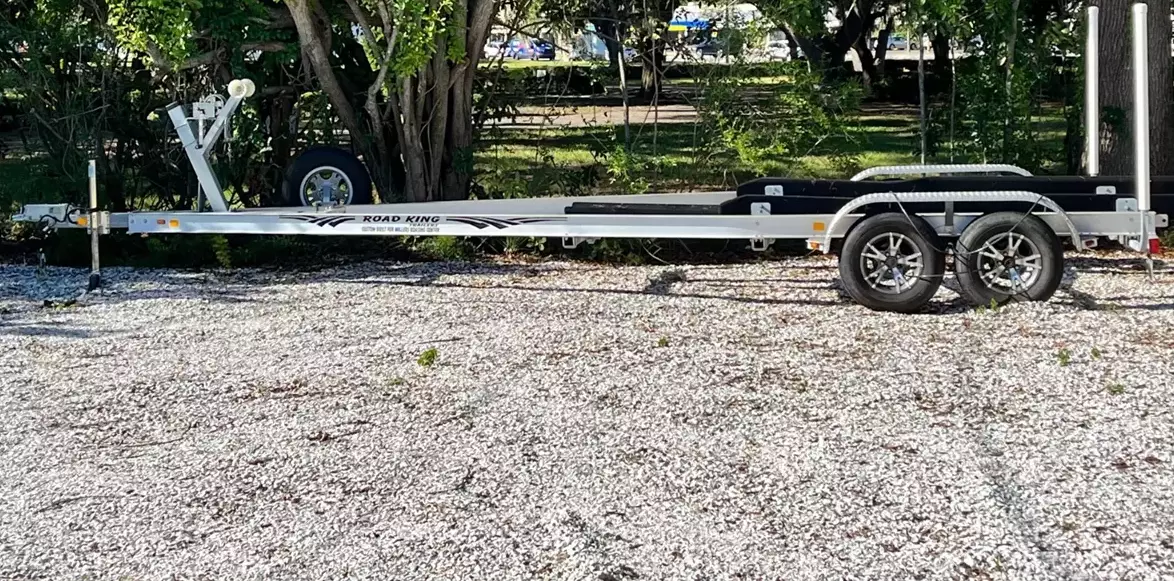
Boat trailers are built primarily from galvanized steel or aluminum. Galvanized steel is stronger, less expensive, and handles heavy loads well, but it can corrode over time, especially in saltwater environments. Aluminum is lighter and naturally corrosion-resistant, making it the preferred choice for saltwater boaters, though it costs significantly more. If you boat primarily in freshwater, galvanized steel is an excellent value. If you regularly launch in the ocean or brackish water, aluminum is worth the premium.
4. Single Axle vs. Dual Axle
Boats under approximately 3,500 lbs can typically be handled by a single-axle trailer. Heavier boats require a dual-axle setup. Dual-axle trailers distribute weight more evenly, improve stability at highway speeds, and provide a backup in case one tire fails. However, they cost more, weigh more, and can be harder to maneuver in tight boat ramps. Factor your boat's weight and how you'll use the trailer before choosing.
5. Roller vs. Bunk Trailer
Roller trailers use a series of rollers that make launching and loading faster and easier, particularly at shallow ramps. Bunk trailers use padded boards that cradle the hull and provide even support along its length, which is gentler on fiberglass hulls during long tows. Many boaters prefer bunk trailers for everyday use and roller trailers when launching solo at challenging ramps. The choice often comes down to the hull shape of your specific boat.
Boat Trailer Buying Guide: Comparison Table
| Feature | Single Axle | Dual Axle | Roller Style | Bunk Style |
| Best For | Boats under 3,500 lbs | Boats over 3,500 lbs | Shallow ramps, solo launch | Fiberglass hulls, long tows |
| Cost | Lower | Higher | Mid-range | Lower to mid |
| Maneuverability | Excellent | Good | Good | Good |
| Highway Stability | Good | Excellent | Good | Excellent |
| Hull Protection | Good | Good | Average | Excellent |
| Maintenance | Simple | More components | Rollers need replacement | Bunks need re-covering |
How to Inspect a Used Boat Trailer Before Buying
Used boat trailers can be excellent value, but a thorough inspection is non-negotiable. To gauge whether a specific one is priced fairly, the Trailer Value Calculator estimates its worth. For guidance on inspecting and evaluating used trailers generally, the Used Trailer Buying Guide walks through the full inspection process. Here's what to focus on specifically for a used boat trailer:
Tires and Wheels
Check tread depth and sidewall condition. Trailer tires are often replaced by date rather than wear, and any tire more than five to six years old should be replaced regardless of appearance. Spin each wheel and feel for bearing roughness, which indicates worn wheel bearings that can cause a wheel-off failure at highway speeds.
Axle and Suspension
Inspect the axle for corrosion, bends, or welds that suggest prior damage. Check the leaf springs or torsion axle for cracking, sagging, or corrosion. The suspension must be in solid condition to protect your boat from road shock.
Frame Condition
Look for rust penetration on steel frames, not just surface oxidation. Surface rust on galvanized trailers is cosmetic; structural rust weakens the frame. Aluminum frames corrode differently, showing pitting and white oxidation. Tap the frame in areas of concern to check for hollow sections.
Lights and Wiring
Test all lights including brake lights, turn signals, and running lights. Wiring harnesses on boat trailers suffer repeated submersion and often fail at connectors or near the rear of the frame. Budget for a wiring replacement if the harness looks original and the trailer is more than a few years old.
Coupler and Safety Equipment
The coupler should latch securely and show no excessive wear on the ball socket. Inspect safety chains for corrosion and adequate length. Confirm the trailer has a working breakaway cable if required for your state.
Verify the VIN
Every trailer has a Vehicle Identification Number. If the VIN is missing or unreadable on a used trailer, you can face problems registering it with your state DMV. Verify the VIN and request title documentation before completing any purchase.
Average Boat Trailer Cost by Material and Configuration
NeighborsTrailer.com
Should You Buy or Rent a Boat Trailer?
If you only need to move your boat occasionally, renting a boat trailer is often the smarter financial decision. Rental eliminates storage costs, registration fees, and maintenance responsibilities. Neighbors Trailer connects you with peer-listed boat trailer rentals across the country, and every rental automatically includes NT Protect, mandatory coverage for a few dollars per day. Renting first also lets you test different trailer types and sizes before committing to a purchase. Our cost-of-ownership breakdown puts real numbers to that buy-vs-rent decision.
When Buying Makes Sense
Ownership becomes cost-effective when you trailer regularly, need a specifically configured trailer for an unusual hull shape, or want to list your trailer as a rental on Neighbors Trailer when you're not using it. Trailer owners on our platform earn passive income from their listings while their trailers would otherwise sit idle.
Frequently Asked Questions: Buying a Boat Trailer
What size trailer do I need for my boat?
Your trailer must support your boat's full beam width and hull length, plus have a GVWR that exceeds your boat's loaded weight (including motor, fuel, gear, and water in the bilge). Most manufacturers provide recommended trailer specifications in your boat's documentation.
Is galvanized steel or aluminum better for a boat trailer?
For freshwater use, galvanized steel offers strong value at a lower cost. For saltwater use, aluminum is the better long-term investment due to its corrosion resistance. Either material requires regular flushing with fresh water after saltwater launches.
How do I register a used boat trailer?
Registration requirements vary by state, but you'll typically need the trailer's title, a bill of sale, proof of insurance in some states, and the VIN. Contact your state DMV for specific requirements before completing a used trailer purchase.
Can I tow a boat trailer with an SUV or pickup?
Most full-size pickups and body-on-frame SUVs are capable of towing boat trailers, but payload and tow ratings vary widely by model, trim, and configuration. Always verify your specific vehicle's tow rating rather than relying on general estimates by model year.
How often do boat trailer tires need to be replaced?
Trailer tires should be replaced every five to six years regardless of tread depth, as UV exposure and ozone degrade the rubber compound over time. Check the DOT date code on the sidewall to determine the manufacturing date of any trailer tires you're evaluating.
Find a Boat Trailer Rental on Neighbors Trailer
Whether you need a boat trailer for a single trip or a full season, Neighbors Trailer connects you with peer-listed options near you. Browse by size and location, select the trailer that fits your boat, and book directly through the platform. Every rental automatically includes NT Protect, mandatory coverage for a few dollars per day. When you're ready to buy, the experience gained from renting different configurations will make you a far more confident purchaser.
Related Articles
- The Used Trailer Buying Guide: What to Inspect Before You Buy
- Trailer Buying Guide: How to Choose the Right Equipment Trailer
- Trailer Rental Guide: How to Choose the Right Trailer to Haul Off-Road Vehicles
- Used Car Trailer Rental Buying Guide
Content updated March 2026