

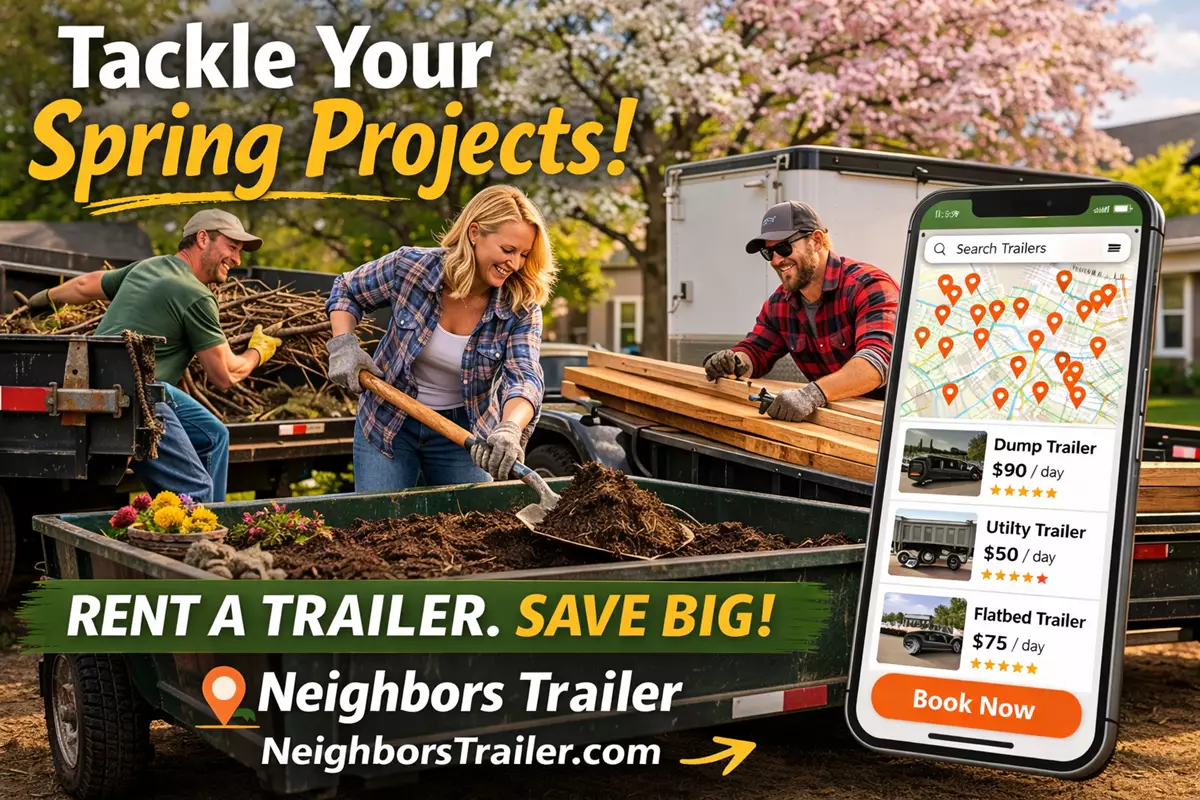
Spring Landscaping & Yard Projects 2026: Which Trailer Should You Rent?
 Neighbors Trailer
Mar 13, 2026 160 13 min read spring, landscaping, trailer rental, peer to peer, hauling
Spring has officially arrived, and so has that long list of outdoor projects you put off all winter. Whether you're hauling away tree debris, bringing in fresh mulch, renovating your back patio, or finally tackling that overgrown corner of your property, there's one thing most spring projects have in common: you're going to need a trailer.
The good news? You don't need to own one. Thanks to peer-to-peer trailer rental platforms like Neighbors Trailer, you can rent exactly the trailer you need for exactly the time you need it — from a neighbor down the road, often for a fraction of what you'd pay at a big-box rental counter.
But here's the part most renters get wrong: not every trailer is suited for every job. Renting the wrong type can mean multiple trips, unsafe loads, or a trailer that simply can't handle what you're throwing at it. This guide walks you through the most common spring yard and landscaping projects, which trailer type works best for each one, and how to find the right rental near you.
Why Spring Is Peak Season for Trailer Rentals
March through May represents the single busiest stretch of the year for trailer rentals — and for good reason. The combination of winter cleanup, early planting season prep, and warm-weather renovation projects creates a surge in demand for hauling capacity that most homeowners simply don't have on their own.
Some of the most common spring projects that drive trailer rental demand include:
- Yard debris removal — branches, leaves, dead shrubs, and brush piles that accumulated over fall and winter
- Mulch and soil delivery — bringing in bulk landscaping materials from a nursery or landscape supply yard
- Fence and deck projects — hauling lumber, posts, and old material off-site
- Landscaping hardscaping — moving pavers, gravel, retaining wall blocks, and similar heavy materials
- Tree and stump removal cleanup — getting rid of the aftermath once the chainsaw work is done
- Garden bed overhauls — transporting large quantities of compost, topsoil, or sod
- Home exterior renovations — hauling away old siding, roofing shingles, drywall, and construction debris
Each of these tasks involves moving significant weight or volume — sometimes both — over a short time window. That's exactly the scenario trailer rentals are built for. Buying a trailer for a single spring weekend makes no sense financially; renting one for a day or two is fast, affordable, and practical.
The Four Trailer Types and What They're Built For
Before you search for a trailer rental near you, it helps to understand the four main types you'll encounter and what each one is designed to handle. Choosing correctly can save you serious time, money, and frustration.
1. Utility Trailers — The All-Around Workhorse
Utility trailers are the most common and versatile trailer you'll find. They're open-sided (or have short fold-down sides), sit low to the ground for easy loading, and come in a wide range of sizes — typically from 4x6 feet up to 6x12 feet or larger.
Best for: Mulch, soil, plants, nursery runs, light debris, equipment like lawnmowers and tillers, lumber for small projects, and general hauling where you need easy side or rear access.
Not ideal for: Large volumes of loose debris (it can spill), very heavy materials like gravel or concrete blocks (weight limits apply), or anything that needs to be protected from the elements.
Towing requirement: Most utility trailers pair with a standard 1-7/8" or 2" ball hitch. Many cars, SUVs, and crossovers can tow a loaded utility trailer — though you should always verify your vehicle's tow rating before loading up.
2. Dump Trailers — The Spring Cleanup Champion
If you're dealing with debris removal of any kind, a dump trailer is the single most efficient tool you can rent. Dump trailers feature a hydraulic or mechanical lift that tilts the bed, letting you offload your cargo without shoveling, raking, or manually unloading anything.
Best for: Yard waste, brush, old mulch, leaves, torn-up landscaping, demolition debris, dirt, gravel, topsoil, and any job where you'll be making multiple dump runs to a transfer station or compost facility.
Not ideal for: Long, flat items like lumber or ladders (the raised sides can make loading awkward), or delicate cargo that could shift during the tipping process.
Towing requirement: Dump trailers tend to be heavier and have higher gross weight ratings, typically requiring a truck or full-size SUV with at least a 2" receiver hitch and solid towing capacity. Check the trailer's GVWR carefully before booking.
Pro tip: For a full weekend of yard cleanup, a dump trailer often pays for itself in the number of trips it saves you. Being able to pull up, hydraulically dump, and leave — rather than spending an hour shoveling into a dumpster — adds up fast.
3. Flatbed Trailers — Heavy Loads and Awkward Shapes
Flatbed trailers have no sides or walls, giving you complete access from every angle. They're built for heavy, oversized, or awkward loads that need to be loaded from the side or secured with straps across the entire surface.
Best for: Landscaping equipment (zero-turn mowers, mini excavators, skid steers), large retaining wall blocks or concrete pavers, palletized materials, riding tractors, ATVs or utility vehicles, and bulky renovation materials.
Not ideal for: Loose, small-particle cargo like mulch or soil, or anything that could shift and fall off without sides to contain it.
Towing requirement: Heavy-duty flatbeds require a truck with a 2-5/16" hitch and appropriate towing capacity. Always check the trailer's weight and your vehicle's rated tow capacity before loading equipment.
4. Enclosed Trailers — When Your Cargo Needs Protection
Enclosed trailers are less common for yard work, but they serve an important role for projects where you need to protect materials from rain, secure tools and equipment overnight, or haul items that can't be exposed during transport.
Best for: Power tools and equipment, finishing materials (flooring, trim, cabinets) for renovation projects, items that need to be locked up securely, or hauling things that would be damaged by spring weather en route.
Not ideal for: Yard waste, loose materials, or anything that requires easy top-access loading.
Spring Project Trailer Cheat Sheet
Not sure which trailer type matches your project? Use this quick reference table to make your decision easy:
| Spring Project | Best Trailer Type | Why It Works |
| Yard debris, brush, leaf removal | Dump Trailer | Hydraulic dump makes unloading effortless |
| Mulch, compost, topsoil delivery | Utility or Dump Trailer | Either works; dump makes unloading faster |
| Gravel, rock, pavers, bricks | Dump or Flatbed | Heavy materials need high weight ratings |
| Nursery run (plants, trees, pots) | Utility Trailer | Low sides, easy load/unload, right size |
| Lumber for deck, fence, pergola | Flatbed or Utility Trailer | Long boards need flat, open surface |
| Riding mower, tiller, equipment | Flatbed or Equipment Trailer | Low deck + ramps for easy equipment loading |
| Demolition / construction debris | Dump Trailer | Mixed heavy debris dumps clean in one motion |
| Old shed, fence removal | Dump or Utility Trailer | Depends on size; utility for wood, dump for mixed debris |
| Power tools, renovation materials | Enclosed Trailer | Locked, protected storage for overnight projects |
| Sod installation or removal | Utility or Dump Trailer | Sod is heavy — dump trailer speeds up unloading |
How Much Does It Cost to Rent a Trailer for Spring Projects?
Rental rates for trailers vary by type, size, and your location — but peer-to-peer platforms like Neighbors Trailer tend to run significantly cheaper than traditional rental companies. Here's a rough sense of what to expect in 2026:
Average Daily Peer-to-Peer Rental Cost by Trailer Type (2026)
Based on typical peer-to-peer platform listings. Actual rates vary by size, location, and owner.

- Utility trailers: Typically $40–$80/day through peer-to-peer platforms. Great value for a weekend nursery run or debris cleanup.
- Dump trailers: Usually $75–$150/day depending on size and capacity. The time savings on unloading generally make this well worth it.
- Flatbed trailers: Around $60–$120/day, varying significantly with load capacity. Essential if you're moving heavy landscaping equipment.
- Enclosed trailers: $80–$160/day, with larger cargo trailers at the high end.
Keep in mind that peer-to-peer rental pricing is often more flexible and competitive than what you'll find at national rental chains, where hidden fees, fuel surcharges, and mileage limits can inflate your final bill significantly. On Neighbors Trailer, you agree to a flat rate upfront with the owner — no surprises at checkout.
Why Peer-to-Peer Trailer Rental Is Ideal for Spring Projects
The traditional trailer rental model has some frustrating limitations: limited inventory, fixed hours, high rates, and locations that may not be convenient to where you're working. Peer-to-peer rental flips that model entirely.
When you rent through Neighbors Trailer, you're borrowing from local owners in your area who list their personal trailers when they're not using them. This creates several advantages for spring project renters specifically:
More trailer types available. National rental companies tend to stock the same few basic models. Local owners list everything from small utility trailers to heavy-duty dump trailers to specialty flatbeds — so you're more likely to find exactly the right fit for your project.
Convenient pickup locations. Because owners are neighbors, you're often picking up the trailer from someone minutes away from your home or job site. No driving across town to a big-box rental center and back.
Flexible scheduling. Many owners offer multi-day rentals with competitive pricing. If your spring project runs long — as they often do — extending your rental is usually a simple conversation with the owner, not a call to a customer service hotline.
Real reviews from real renters. Every trailer on the platform has ratings and feedback from previous renters, so you know what you're getting before you hitch up and drive away.
Tips for Loading and Hauling Spring Loads Safely
Regardless of which trailer type you rent, a few safety practices make a significant difference — especially when you're dealing with loose materials, heavy loads, or awkward shapes common to spring projects.
Weight distribution matters. Load 60% of your cargo weight in front of the trailer's axle and 40% behind it. Rear-heavy loads cause trailer sway, which is one of the most dangerous situations you can encounter on the road.
Don't overload the trailer. Every trailer has a posted Gross Vehicle Weight Rating (GVWR) — the maximum combined weight of the trailer and its cargo. Exceeding this number is not only unsafe but can damage the trailer and create liability issues. When in doubt, make two trips.
Secure loose material before moving. Mulch, topsoil, yard debris, and gravel can become road hazards if they blow out of an open trailer at highway speeds. Use a cargo net or tarp to contain loose loads, and secure it with straps or bungee ties before you leave.
Check your trailer lights and hitch connection before every trip. A quick walk-around takes two minutes and can prevent everything from a traffic stop to a serious accident. Make sure brake lights, turn signals, and running lights all work with your vehicle.
Know your tow vehicle's limits. Your vehicle's tow rating isn't just a suggestion — it's an engineering limit. Overloading your tow vehicle causes brake fade, transmission strain, and handling degradation. Check your owner's manual or the label inside the driver's door jamb before hooking up a heavy dump trailer or flatbed.
How to Find a Rental Trailer for Your Spring Project
Getting started with Neighbors Trailer is straightforward. Here's the basic flow:
- Download the Neighbors Trailer app (available on iOS and Android) or visit the App store and Search “Neighbors Trailer”.
- Search your location and select the trailer type you need — utility, dump, flatbed, or enclosed.
- Filter by availability and dates to see what's available for your spring project weekend.
- Review listings — check the trailer's size, GVWR, photos, owner rating, and included features like ramps or tie-downs.
- Book and confirm with the owner. You'll agree on pickup time, location, and any specific instructions.
- Complete your project and return the trailer. Leave a review so the next renter knows what to expect.
Most trailers can be booked same-day or within 24 hours — so even if your project comes together at the last minute, you're usually covered.
Frequently Asked Questions
Do I need a special license to tow a rental trailer?
In most U.S. states, a standard driver's license is sufficient to tow trailers under 10,000 lbs GVWR. Larger commercial trailers may require a CDL. When in doubt, check your state's DMV website for current requirements, and always confirm your vehicle's towing capacity before renting.
What if I need the trailer for more than one day?
Most owners on Neighbors Trailer offer multi-day rental pricing. Simply indicate your full rental period when booking, or message the owner to discuss a weekend rate. Multi-day rentals are common for bigger spring projects and are usually priced accordingly.
Is the trailer insured?
Neighbors Trailer provides protection options for renters and owners on the platform. Coverage specifics vary, so review the protection plan details before completing your booking. It's also worth checking whether your auto insurance policy extends to towed trailers — many personal auto policies do provide some level of coverage. To learn more about how trailer rental insurance works, check out our comprehensive guide: Peer-to-Peer Trailer Rental Insurance Explained: What Every Renter and Owner Needs to Know in 2026.
What size trailer do I need for yard debris?
For typical residential yard cleanup, a 6x10 or 6x12 dump trailer handles most jobs in one or two loads. For extensive cleanup — removing multiple truckloads of debris, brush piles, or demolition material — consider a larger 14-foot dump trailer or plan for multiple haul runs.
Can I pick up bulk mulch or soil in a utility trailer?
Yes, but be mindful of weight limits. A cubic yard of mulch weighs roughly 400–800 lbs depending on moisture content, while a yard of topsoil can weigh 1,500–2,000 lbs. Always know your trailer's payload capacity before ordering bulk materials, and err on the side of slightly underfilling to avoid overloading.
Ready to Tackle Your Spring Projects?
Spring yard work doesn't have to mean renting a dumpster, making a dozen trips in a pickup truck, or paying inflated rates at a big-box rental center. With peer-to-peer trailer rental through Neighbors Trailer, you can get exactly the trailer you need — a dump trailer for debris, a utility trailer for mulch, a flatbed for equipment — from a neighbor who actually takes care of their equipment.
The projects are waiting. The right trailer is closer than you think.