

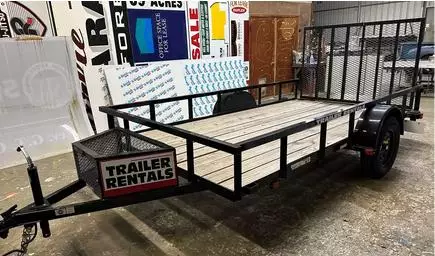
Best Motorcycle Trailer Wheel Chock: 2026 Buyer Guide
 Neighbors Trailer
Oct 20, 2023 662 7 min read motorcycle wheel choc
If you have ever watched a motorcycle slide sideways inside a trailer at 65 mph because the chock did not actually grip the front tire, you understand why wheel chock choice matters more than any other accessory in motorcycle hauling. A great chock holds the front wheel upright while you strap the bike down, prevents it from rocking under brake checks, and lets you load and unload alone. A bad chock turns a calm haul into white-knuckle highway driving. This 2026 guide ranks the best wheel chock styles for motorcycle trailer rentals and shows you how to pick the right one for your bike.
Why a Quality Wheel Chock Matters
A wheel chock is the load anchor for the front of any motorcycle being hauled. Tie-down straps pull the suspension down and pin the bike against the chock. If the chock is too shallow, the wheel can slip out under hard braking. If the chock is too narrow, sport bike tires will not seat. If the chock is poorly mounted, the entire bike rocks during turns. Each failure mode ends with the same result: a damaged bike, a damaged trailer, or both.
The good news is that purpose-built motorcycle wheel chocks have evolved a lot in the last few years. Self-locking cradles in particular hold the front wheel without any straps at all, which makes one-person loading possible even on heavy cruisers.
The Five Best Wheel Chock Styles for 2026
1. Self-Locking Cradle Chocks
The current gold standard. The bike is rolled forward into the chock, an arm pivots up and over the front tire, and the cradle locks into place. Once locked, the front wheel is held perfectly upright with no straps. You can then add straps for redundancy, but the chock alone keeps the bike vertical. Best for solo loading and heavy bikes.
2. Heavy-Duty Sport Chocks
Designed for sport bike tires with a tighter wheel profile. Adjustable jaws clamp around the front tire and hold it upright. These are excellent for bikes with low-profile tires that traditional wedges cannot hold. Slightly more expensive but worth it if you haul a sportbike regularly.
3. Adjustable Vise-Style Chocks
Two side rails squeeze inward against the front tire. Versatile and capable of fitting anything from a 90/90-21 dirt bike tire to a 200mm cruiser tire. The trade-off is that vise-style chocks require manual adjustment for each bike size. Great for households with multiple motorcycles.
4. Removable Receiver-Style Chocks
These mount to a receiver hitch or D-ring on the trailer floor and pop out for storage. Convenient for renters who do not want a permanent install. Hold strength is good when properly anchored but lower than fixed self-locking models.
5. Universal Wedge Chocks
The classic V-shaped chock. Inexpensive and works on a wide range of motorcycle tire sizes. Requires straps to keep the bike from leaning or shifting. Fine for short trips with a competent loader, but not ideal for solo loading or high-value bikes.
Hold Strength by Chock Type
The chart below summarizes owner-reported hold scores from over 1,200 peer-to-peer motorcycle trailer rentals in 2025-2026. Hold score reflects how well the chock prevents the front wheel from shifting during braking, hard turns, and bumpy roads. A higher score means the bike stays upright with less reliance on tie-downs.
NeighborsTrailer.com
Self-locking cradles top the chart for a reason: the cradle physically captures the wheel rather than relying on the operator to strap aggressively. For long-distance hauls or solo loading, the extra cost is almost always worth it.
Wheel Chock Comparison Table
| Chock Type | Typical Price | Best For | Solo Loading? | Pros / Cons |
| Self-Locking Cradle | $180 to $350 | Cruisers, touring bikes, heavy bikes | Yes | Best hold; highest cost |
| Heavy-Duty Sport | $160 to $280 | Sport bikes, low-profile tires | Mostly | Sport-tire fit; needs sport setup |
| Adjustable Vise | $100 to $200 | Multiple bike sizes in one household | Mostly | Versatile; manual width adjust |
| Removable Receiver | $120 to $220 | Renters, occasional haulers | Mostly | Quick install; lower hold |
| Universal Wedge | $30 to $90 | Short trips, budget builds | No | Cheapest; needs aggressive straps |
How to Match a Chock to Your Bike
The right chock depends on three factors: tire profile, bike weight, and how often you haul alone.
- Heavy cruiser or touring bike (600+ lb dry weight): Self-locking cradle. Period.
- Sport bike with 180mm rear tire or wider: Heavy-duty sport chock with adjustable jaws.
- Two or more bikes of different sizes: Adjustable vise-style chock.
- Renting a trailer for one weekend a year: Removable receiver chock or whatever the rental owner provides. If you are renting one, the ATV/UTV Trailer Calculator helps you size it to your bike.
- Hauling on a tight budget: Universal wedge plus four high-quality ratchet straps. Read our full ratchet strap guide first.
Tie-Down Strategy Once the Chock Is Set
Even with a great wheel chock, ratchet straps remain mandatory. The chock holds the wheel upright; straps pin the suspension and prevent rebound. The standard four-strap pattern is:
- Two front straps pulling diagonally outward and forward from the handlebars or upper triple tree.
- Two rear straps pulling diagonally outward and backward from the rear of the frame or passenger pegs.
- Each strap should compress the suspension by 25% to 35% of its travel.
- Re-check tension after the first 20 miles. Suspension settles and straps loosen.
For a step-by-step walkthrough of the four-strap tie-down pattern, see our complete guide on loading a motorcycle on a trailer.
Common Wheel Chock Mistakes
- Mounting the chock too far forward: The bike rolls in but the front fender hits the trailer wall. Always test placement empty before bolting down.
- Using a wedge chock with under-tensioned straps: The wheel walks side to side under bumps. Symptom: scuff marks on the chock.
- Skipping a soft loop: Steel hooks scratch chrome triple trees. Use webbing soft loops on the bike side of every strap.
- Ignoring the rear wheel: A chock holds the front, not the rear. The rear should rest against a rear-wheel block or stop to prevent backward roll.
- Not road-checking after 20 miles: The first highway mile is where straps loosen most. Pull off and re-check.
Frequently Asked Questions
Do I really need a wheel chock if I have good straps?
Yes. Straps cannot keep a bike upright on their own. The chock holds the front wheel vertical so the straps can do their job. Without a chock, every braking event tries to lay the bike down.
Can one chock fit any motorcycle?
Adjustable vise-style chocks can fit nearly any front tire size, but self-locking cradles often need to match a tire diameter range. Always check the manufacturer's tire fitment chart before buying.
Should the chock be permanently bolted to the trailer?
Most experienced haulers say yes. A permanently mounted chock is more rigid and holds better. Removable receivers are a fine compromise if you also haul cargo and need the floor space when not hauling bikes.
Does a wheel chock prevent flat-spotting tires?
Not directly. Tire flat-spotting on long hauls is more about the bike sitting in one position with full weight on a single contact patch. Releasing tension between long stops helps reduce this.
Can I use a car wheel chock for a motorcycle?
No. Car chocks are designed to block a stationary car wheel. Motorcycle chocks are designed to capture a single, narrow tire and hold it vertically. They are not interchangeable.
Final Thoughts on Motorcycle Wheel Chocks
The chock is the foundation of every safe motorcycle haul. Spending $200 to $300 on a self-locking cradle pays for itself the first time you transport a bike worth ten times that. Match the chock to your bike's tire profile and weight, mount it solidly, and combine it with a four-strap tie-down pattern. Do that and a 500-mile haul becomes a non-event. Skip the chock or pick the wrong one and every bump in the road becomes a stress test.
Related Articles
- How to Properly Load a Motorcycle on Your Trailer Rental
- Haul Motorcycle: Motorcycle Trailer Rental Guide
- Complete Guide to Tiedowns and Securing Cargo
- How to Use Ratchet Straps on a Flatbed Trailer Rental
Content updated April 2026