

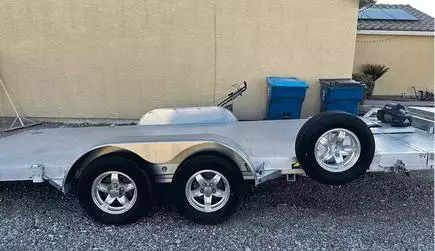
How to Mount a Winch on Your Car Trailer
 Neighbors Trailer
Nov 5, 2023 606 7 min read installing a winc
Mounting a winch on a car trailer rental turns a basic transport rig into a self-loading vehicle hauler. If you are picking up a project car, recovering a non-runner, or simply want to load and unload solo, a properly installed winch saves your back and keeps the loading process safe. The catch is that mounting a winch is not just bolting it down. The mount has to handle thousands of pounds of pulling force without flexing, and the wiring has to stand up to vibration and weather.
This guide walks through the safe, well-thought-out way to install a winch on a car trailer rental, from picking the right winch to running power and testing the first pull. Always confirm with the trailer owner that a winch installation is allowed on a peer-to-peer rental, since some setups expect the trailer to be returned in original condition.
Choose the Right Winch for the Job
Winch capacity should be at least 1.5 times the heaviest vehicle you plan to load. Compact cars at 2,800 pounds need a 5,000-pound winch at minimum. Heavier sedans, SUVs, and light trucks need progressively more pulling power. The chart below summarizes a quick capacity reference.
NeighborsTrailer.com
Synthetic rope winches are lighter and safer if a line snaps, but they need more careful storage. Steel cable winches are heavier and tougher in dirt and gravel environments. Pick the winch type based on where you will use the trailer most. For a deeper comparison of winch options on a car trailer rental, see best car trailer rental winches.
Choose the Mount Plate, Not Just the Winch
The mount plate is what transfers winch load into the trailer frame. Skipping the mount plate, or bolting the winch to a thin section of decking, will tear the floor out the first hard pull. Look for a mount plate that:
- Bolts directly to the main frame rails, not the cross-decking.
- Carries a load rating equal to or greater than the winch.
- Has a flat fairlead or hawse fairlead matched to your line type.
- Provides clearance for the winch motor housing without contacting the trailer tongue.
Most car trailer rentals on a peer-to-peer marketplace already have a winch mount installed at the front of the deck. If yours does not, talk to the owner before drilling new holes; some owners will install a mount themselves rather than have a renter modify their trailer.
Prepare the Mounting Location
Position the winch at the front center of the trailer, in line with the loading direction. Lay out the winch on the trailer with the line spooled, the controller running, and the contactor box installed. Mark every bolt location with a marker before any drilling. Drill straight through the frame using bits sized for the bolts, deburr the holes, and apply a corrosion-resistant primer if the frame is bare steel where you drilled.
Use Grade 8 bolts with lock washers and nylon-insert lock nuts. Torque to the winch manufacturer's spec. Hand-tightening is not enough; a winch under load can develop tens of thousands of pounds of cyclic stress on those bolts.
Wire Power the Right Way
Most car trailer rentals use a stand-alone winch battery rather than running cables back to the tow vehicle. A stand-alone setup keeps your tow vehicle's electrical system clean and lets you operate the winch without the truck running. Mount the battery in a sealed box ahead of the trailer wheels, fuse the positive lead within 18 inches of the battery, and ground the negative directly to a clean spot on the frame.
If you wire to the tow vehicle, run dedicated 2-gauge cables from the battery through a circuit breaker, into a quick-disconnect plug, and back to the trailer. Never piggyback a winch on the standard seven-pin trailer connector; the seven-pin lines are not rated for winch current and will melt under load.
Test the Install Before the First Real Pull
| Test | What to Check | Pass Criteria |
| Free spool | Line pulls out smoothly with the clutch released | No binding, no grinding |
| Powered in, unloaded | Winch spools cleanly under no load | Even wrap, no jerking |
| Light load test | Pull a tire or small object along the deck | Smooth pull, no mount flex |
| Half-capacity test | Pull a vehicle weighing about half the winch rating | Even pull, voltage holds above 11.5V |
| Loaded vehicle test | Load the actual project vehicle from the ground | Mount stays solid, line tracks center |
If any test fails, stop and address the issue before progressing. A failed mount under a real vehicle load can launch a 4,000-pound car backward off the deck. The five-minute test cycle above is the cheapest insurance you will ever buy.
Loading a Vehicle With the New Winch
Once installed and tested, the winch makes loading much faster and safer. Before any pull:
- Park the trailer on level ground, set the parking brake, and chock all four trailer wheels.
- Center the loading vehicle on the approach angle so the winch pulls straight along the line of travel.
- Use a tow strap or hook to a designated factory tow point, never a suspension component or bumper trim.
- Stand to the side of the line, never directly in line with the cable, in case it parts under load.
- Keep an observer on the opposite side of the trailer to call out tracking issues.
Pull slowly. Stop every few feet to confirm the vehicle is centered on the deck. Once loaded, secure the vehicle with at least four ratchet straps or chains rated for the load, leaving the winch line tensioned but not as the only restraint. The car trailer rental tiedown guide covers tiedown configurations in more depth.
Care and Maintenance After Installation
After the first real pull, walk around and re-torque every mounting bolt; vibration during loading often loosens fasteners that felt tight at install. Inspect the wiring for chafing, the line for kinks, and the fairlead for sharp edges. Spool the line out fully every few months to keep it from compacting under load.
If the trailer is a peer-to-peer rental, document the install with photos and provide them to the owner. A clean, well-documented winch installation often turns into a long-term rental relationship and discounted pricing for repeat trips.
Frequently Asked Questions
Can I install a winch on any car trailer rental?
Most flatbed and tilt-deck car trailers can accept a winch mount, but installation is the owner's call. Always confirm before drilling or modifying. Some peer-to-peer marketplace listings note pre-installed winches as a feature, which avoids the install step entirely.
How long does a typical winch installation take?
Plan a half-day for a clean install with proper wiring. Rushing the wiring is the most common cause of post-install failure, so do not try to compress this into an hour.
Do I need a portable battery or hardwired power?
Either works, but a portable battery on the trailer keeps wiring simple and lets you load without the tow vehicle running. Match the battery to the winch's amp draw at full load.
What if my vehicle is too low for the trailer ramp angle?
Use approach plates, longer ramps, or a low-angle drop-deck trailer. Never try to muscle a low-clearance car up a steep ramp; the front bumper will scrape and the underside can hang up on the deck edge.
How heavy a vehicle can I winch up the trailer?
Stay below the rated capacity of your winch and well below the trailer's payload rating. The 1.5x safety margin on winch capacity exists because rolling friction can spike when a tire hits the deck transition.
Final Thoughts
A winch on a car trailer rental pays for itself the first time you load a non-runner alone. The keys are picking the right capacity, mounting to a real frame, wiring through a fused circuit, and running the test cycle before the first real pull. With those four steps complete, the winch becomes a quiet, reliable tool that takes the worry out of every loading job.
Related Articles
- Best Car Trailer Rental Winches
- Learn How to Install a Winch on Your Flatbed Trailer Rental
- Car Trailer Rental Tiedown Guide
- Cambuckle Ratchet Straps Car Trailer Tie Downs
Content updated May 2026