

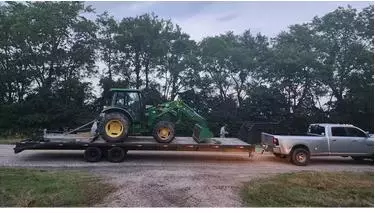
Learn How to Load a Bulldozer on a Flatbed Trailer Safely
 Neighbors Trailer
Apr 5, 2024 717 7 min read Flatbed Trailer Renta
Loading a bulldozer onto a flatbed trailer is one of the highest-stakes hauling jobs a renter or owner can take on. Bulldozers are heavy, top-heavy when raised, and unforgiving if even one tie-down slips. With the right plan, the right trailer, and a methodical loading sequence, you can move a dozer safely from job site to job site without drama. This guide walks you through every step, from choosing the trailer to chaining the blade down for transport.
Match the Trailer to the Dozer
The single most important decision is matching your flatbed trailer's capacity to the bulldozer's loaded weight. Operators get into trouble when they assume a 14,000 pound deck rating will handle a "small" dozer. Compact crawlers like the Cat D3 still tip the scales around 18,500 pounds with attachments and fuel, which exceeds many standard equipment trailers. Always check the trailer's GVWR plate, the axle ratings, and the deck rating, then subtract a 15 percent safety margin before loading anything.
For most landscaping and demolition jobs, a tilt-deck or hydraulic flatbed with a 20 to 24 foot deck and tandem dual axles handles compact and small dozers well. For mid-size machines, you'll need a gooseneck or pintle-hook deck-over rated at 25,000 pounds or more. Anything in the D8 class or above usually requires a commercial lowboy and a CDL driver, not a rental flatbed.
Bulldozer Weights at a Glance
The chart below shows typical operating weights by dozer class so you can quickly gut-check whether your trailer is appropriate before booking.
NeighborsTrailer.com
Pre-Loading Checklist
Before the dozer rolls anywhere near the ramps, walk the trailer with a checklist. A five minute inspection up front saves a ruined day in the field. Pay attention to tire pressure on every axle, brake function on both the truck and trailer, ramp pin engagement, deck cleanliness, and the condition of every chain, binder, and ratchet you plan to use.
For more on prepping your rig before any heavy haul, see our flatbed maintenance and pre-tow guide, which covers tire wear patterns, bearing checks, and brake controller setup.
Required Equipment Reference
| Component | Minimum Spec | Why It Matters |
| Tie-Down Chains | Grade 70, 3/8 inch, four chains | FMCSA requires four anchor points for any vehicle over 10,000 lbs |
| Load Binders | Ratchet style, 9,200 lb WLL | Ratchets give controlled tension without snap-back risk |
| Wheel Chocks | Rubber, 10 inch minimum | Prevents roll on inclines during chaining |
| Ramps | Rated for 1.5x machine weight | Distributes peak load during transition over the trailer lip |
| Deck Surface | Clean, dry, no oil | Tracks grip the deck better and steel cleats won't slide |
Step-by-Step Loading Sequence
Loading order matters. Skipping or reordering these steps is how machines roll off ramps, crush operators, or shift mid-transit. Take it slow, even if you've done it a hundred times.
1. Stage the Trailer
Park on level ground. A slope, even a slight one, multiplies how aggressively the dozer wants to slide once it's halfway up the ramps. Set the truck's parking brake, chock the trailer's rear wheels, and lower the landing gear if you're loading off a gooseneck.
2. Deploy and Pin the Ramps
Lower the ramps slowly, check that pins are fully seated, and verify the ramp angle is shallow enough for your machine. Most dozers want a ramp angle of 15 degrees or less. Heavy iron with low ground clearance can high-center on steeper angles. For a deeper look at ramp setups and angles, our flatbed loading ramps guide breaks down the differences between fold-out, slide-out, and beavertail decks.
3. Approach Square and Slow
Center the dozer with the trailer before approaching. Drive straight up the middle of the ramps in low gear, never side-slipping or correcting hard. A spotter on the ground watching both tracks is worth more than any GPS.
4. Position for Balance
Aim for roughly 60 percent of the dozer's weight forward of the trailer's center axle. This loads the tongue correctly, keeps the trailer planted, and prevents the dangerous porpoising that under-tongue loads cause at highway speeds. If you want the math on getting this right, our tongue weight guide walks through the calculations.
5. Lower the Blade and Ripper
Once positioned, drop the blade and any rear ripper firmly onto the deck. This drops the dozer's center of gravity by several inches and removes hydraulic creep as a tie-down variable.
6. Chain Down All Four Corners
Run chains from the trailer's stake pockets to dedicated tie-down points on the dozer. Cross the front chains for stability, run the rears straight back, and tension every binder until the chains sing if you tap them. Re-check every chain after the first 25 miles, then again at every fuel stop.
Common Mistakes That Cause Accidents
Most flatbed hauling incidents involving heavy equipment trace back to a small handful of mistakes. Knowing them up front lets you avoid the trap.
Underestimating the loaded weight is the most common error. People weigh the machine empty and forget about fuel, attachments, and operator counterweight. Skipping the fourth tie-down is the second most common, since DOT inspections fail any heavy load with fewer than four direct attachments. Loading on uneven ground, ignoring ramp angle, and forgetting to lower the blade round out the list. For a broader look at avoidable errors, see our roundup of flatbed towing mistakes.
On the Road: Driving With a Loaded Dozer
Once you're rolling, treat the haul like the high-stakes job it is. Plan your route to avoid steep grades and low bridges, leave eight seconds of following distance on the highway, and downshift on descents rather than riding the brakes. Stop within the first 25 miles to confirm nothing has shifted, then again every 50 to 100 miles after that. A short stop costs minutes; a thrown chain on the interstate can close a highway for hours.
Frequently Asked Questions
Do I need a CDL to haul a bulldozer on a flatbed?
Federal rules require a Class A CDL when the combined vehicle weight exceeds 26,001 pounds and the trailer alone exceeds 10,001 pounds. Most compact dozers on a tandem flatbed will push you over that threshold, so verify with your state DMV before any commercial haul.
How many tie-downs are required by law?
FMCSA regulations require a minimum of four direct tie-downs for any single piece of heavy equipment weighing more than 10,000 pounds. Each tie-down must have a working load limit appropriate for the cargo, and chains must be the proper grade for the weight class.
What's the safest way to chain the blade?
Lower the blade fully onto the deck, then run a separate chain through the blade's lift cylinder mounts or factory tie-down lugs back to the trailer. Never tie down to a hydraulic ram, only to factory-rated anchor points.
Can I rent a flatbed long enough for a mid-size dozer?
Yes. Many trailer owners on Neighbors Trailer list 25 to 30 foot gooseneck and deck-over flatbeds with capacities up to 25,000 pounds, which covers most mid-size dozers. Filter by deck length and GVWR when you search.
What ramp angle is safe for a tracked machine?
Keep the ramp angle under 15 degrees for most crawler dozers. Steeper angles risk high-centering the machine on the trailer lip, especially for low-clearance models.
Final Word
Hauling a bulldozer safely comes down to preparation, the right trailer rating, and discipline at every step. Match the trailer to the machine, walk the pre-load checklist, load slow and centered, and chain like your life depends on it, because someone's might. Renters on Neighbors Trailer have access to a fleet of flatbed and gooseneck options across the country, so you can find a rig built for the dozer you need to move rather than forcing the dozer onto a trailer that isn't ready for it.
Related Articles
- Flatbed Trailer Rental Loading Ramps
- Flatbed Trailer Tongue Weight Guide
- Trailer Safety 101: Heavy Hauling Tips
- Towing Mistakes to Avoid When Using a Flatbed Trailer Rental
Content updated May 2026