

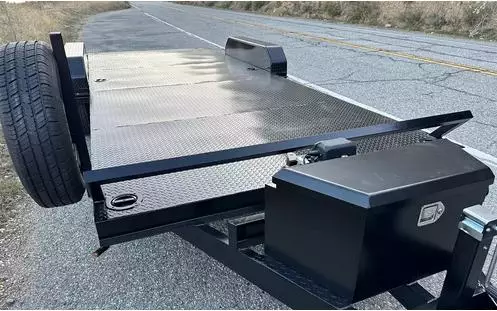
The 3 Best Battery Boxes You Can Buy for a Flatbed Trailer
 Neighbors Trailer
Mar 1, 2024 753 7 min read Flatbed trailer renta
The Best Battery Boxes for a Flatbed Trailer in 2026
If your flatbed trailer runs electric brakes, an electric jack, work lights, a winch, or any other 12-volt accessory, you need a battery on the trailer. And once you have a battery, you need a way to protect it from rain, road grime, vibration, and the occasional hand reaching where it should not. That is what a trailer battery box does. The right box keeps your battery alive longer, keeps your wiring tidy, and keeps you out of trouble with state DOT inspectors who do not want to see exposed terminals on a public road.
This guide walks through what to look for in a flatbed trailer battery box, our three top picks for 2026, sizing tips by battery group, and the most common questions renters and owners ask. Whether you are upgrading a rental fleet or building out your own personal hauler, you will leave with a clear answer on what to buy.
Why a Battery Box Matters on a Flatbed
Flatbeds spend their working life fully exposed. Unlike enclosed trailers, there is no skin or roof shielding the gear bolted to the frame. A battery sitting unprotected on a flatbed deck or tongue is going to soak up rain, salt spray in winter, and dirt from the road. Within a season, terminals corrode, voltage drops, and accessories start glitching. Beyond the corrosion problem, a loose, exposed battery is also a real safety hazard: a bouncing terminal that touches the steel deck can throw sparks and start a fire. A solid battery box solves all of that for under a hundred bucks.
What a Good Battery Box Does for You
Keeps water and debris off the terminals. Locks the battery in place so it does not migrate during transit. Prevents accidental shorts. Adds a layer of UV protection for the case itself. Many boxes also include integrated vents so hydrogen gas from charging cannot build up, which matters if you ever park the trailer in a closed shop. If you are also adding electric brakes, our flatbed brake installation guide walks through the wiring side of the same project.
Our Top 3 Battery Boxes for Flatbed Trailers
We narrowed the picks down by looking at fit, weather sealing, build quality, and price. All three options below handle the most common Group 24 and Group 27 trailer batteries.
1. NOCO HM408BKS Snap-Top Battery Box
NOCO's snap-top is the easy pick for most trailer owners. It is built from heavy-duty polypropylene that shrugs off impact, comes with a vented snap-down lid, and includes a built-in handle so you can lift the whole box off the trailer in one move. The internal dimensions fit Group 24 batteries with room to spare, and the four mounting holes line up with most universal frame brackets. Price runs about $35 to $45.
2. Attwood 9094-1 Power Guard 27
If you run a Group 27 deep cycle, the Attwood 9094-1 is a step up in size and rigidity. It uses a tray-and-strap design so you can pull the battery out for off-season storage without unbolting the box from the trailer. The lid latches with two stainless clips, which holds up to highway speeds better than friction-fit lids. Expect to pay $40 to $55.
3. Camco Heavy Duty Battery Box (Group 24)
Camco's offering is the budget winner. It uses a basic strap-down lid and a single vent port, but the build quality is good and the seal stays tight enough for everyday hauling. If you want a clean, no-frills box for a small jobsite trailer or a backup unit, this one runs about $20 to $30. Pair it with a quality strap and you have a reliable setup for years.
Sizing Your Battery Box: Quick Reference
The number one mistake we see is buying a box that does not fit the battery. Match your battery group to the box size before you click buy.
| Battery Group | Typical Length x Width x Height | Common Trailer Use | Recommended Box |
| Group U1 | 7.7 x 5.2 x 7.3 in | Lawn or small utility trailer | Camco compact |
| Group 24 | 10.3 x 6.8 x 8.9 in | Single-axle flatbed, light duty | NOCO HM408BKS |
| Group 27 | 12.1 x 6.8 x 8.9 in | Tandem-axle flatbed with electric brakes | Attwood Power Guard 27 |
| Group 31 | 13.0 x 6.8 x 9.4 in | Heavy-duty flatbed, winch + brakes + lights | NOCO HM426BKS or Attwood 9067 |
What to Look for in a Battery Box
Material matters. UV-stabilized polypropylene holds up in sun and cold without cracking. Cheap polyethylene boxes turn brittle in two seasons. Look for a vented lid, ideally with a removable plug, so charging gas can escape but rain cannot drip in. Check that the strap or latch system is corrosion-resistant; stainless or rubber-coated nylon both work, while bare steel rusts fast on a working trailer. Confirm internal clearance for both the battery and the cable terminals, and make sure the cable exit slots line up with how your wiring runs.
Mounting Tips for a Flatbed Application
The two best spots are the A-frame tongue or a small platform welded to the frame just behind the coupler. Bolt the box, do not zip-tie it. Use stainless hardware so it survives winter. Always run a fused inline disconnect within 12 inches of the positive terminal so you have a quick way to kill power for service. If you are also upgrading other gear, our guide to electric trailer jacks covers the next most common 12-volt upgrade owners make after lights.
Cost vs Value: What Owners Actually Spend
Across our network of trailer owners on Neighbors Trailer, the most common spend on a battery box upgrade is the $30 to $60 range. The chart below shows the rough split for an average flatbed owner outfitting a single-axle hauler with a battery box, a Group 24 battery, hardware, and a fused disconnect.
NeighborsTrailer.com
For under $200 all in, you get a clean, reliable, weather-protected 12-volt source on the trailer. Compared with replacing a corroded battery every season, the upgrade pays for itself in two years.
Frequently Asked Questions
Do I need a battery on my flatbed if I do not have electric brakes?
Maybe. You do not strictly need one for plain trailer lights since those run off the tow vehicle's harness. But if you have a breakaway switch (required by law on most trailers over 3,000 lbs GVWR), you do need a small battery to power the brakes if the trailer separates. A battery box protects that battery year round.
Can I use a sealed AGM battery in a regular battery box?
Yes. AGM batteries do not vent gas under normal use, so the vented lid is not a hard requirement. Most owners still use the same box because it provides physical protection and a clean mounting solution.
How often should I replace a flatbed trailer battery?
Most flooded lead-acid batteries last 3 to 5 years on a trailer if kept clean and charged. AGM batteries often hit 5 to 7 years. A good battery box adds at least a year of life by keeping moisture and grime off the terminals.
Does the battery box need to be grounded to the frame?
No, the box itself is plastic and does not need grounding. The negative cable from the battery should be grounded to a clean spot on the trailer frame, ideally with a star washer for a solid connection.
Will a battery box keep my battery warm in winter?
Not significantly. Standard plastic boxes provide minimal insulation. If you are storing the trailer in freezing temps for long stretches, pull the battery and bring it indoors, or buy an insulated cold-weather wrap.
Final Take
A battery box is one of the cheapest, most useful upgrades you can make to a working flatbed. The NOCO HM408BKS handles the typical Group 24 setup for most owners. The Attwood Power Guard 27 fits Group 27 deep cycles for heavier rigs. The Camco box is the right call for a budget build or a backup trailer. Whichever one you pick, mount it solid, run a fused disconnect, and your trailer's 12-volt system will outlast everything else on the deck.
Related Articles
- Flatbed Trailer Rental Accessories
- Flatbed Trailer Rental Tool Box Guide
- Cargo Trailer Wiring Guide
- Cargo Trailer Lighting Guide
Content updated May 2026