

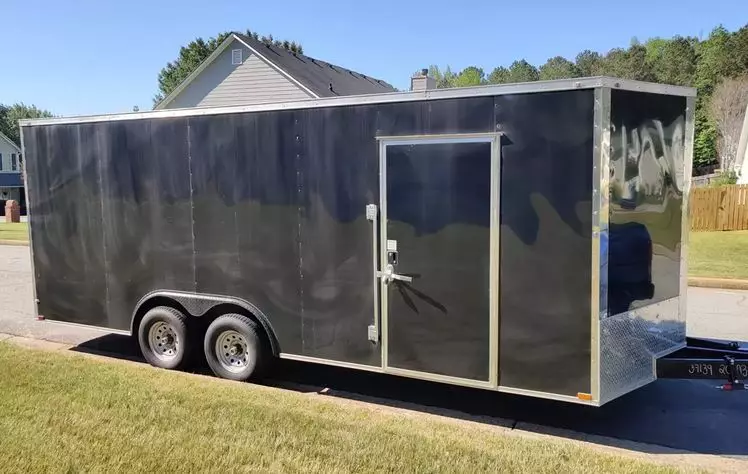
Disc or Drum Brakes: Which Is Better for an Enclosed Trailer?
 Neighbors Trailer
Jan 11, 2024 787 6 min read
Trailer brakes are one of those systems most renters never think about until a brake controller setting feels off, a hill turns into a white-knuckle ride, or the trailer pushes the truck through an intersection. If you tow an enclosed trailer often enough, a brake upgrade can transform how the rig handles, shorten stopping distance, and add safety margin for the days when traffic does the unexpected. This guide explains what an enclosed trailer brake upgrade looks like, when it makes sense, and what to look for in a rental listing if you want a trailer with upgraded brakes already installed.
If you are towing a rental rather than a trailer you own, you will not be doing the upgrade yourself; the owner does. The takeaway for renters is knowing how to spot an upgraded system in a listing and how to set your in-cab controller to take full advantage of it.
The Three Main Trailer Brake Systems
Enclosed trailer brakes fall into three buckets: electric drum brakes (the most common factory option on small and mid-size enclosed trailers), electric-over-hydraulic disc brakes (the most common upgrade target), and surge brakes (mostly seen on boat trailers and a few legacy enclosed designs). Each has its own performance envelope, cost, and maintenance load.
Electric drum brakes are simple, cheap, and adequate for trailers under about 7,000 pounds gross. They lose performance fast when overloaded, when going through deep water, or when the drums get hot on a long downhill grade. Electric-over-hydraulic disc brakes solve all three of those problems and are the standard upgrade path. Disc systems shed heat better, do not fade, and recover quickly after a water crossing.
What an Enclosed Trailer Brake Upgrade Involves
A full upgrade typically replaces the drum brake assemblies at each wheel with disc brake calipers and rotors, adds an electric-over-hydraulic actuator (the unit that converts the trailer plug signal into hydraulic pressure), and may include new brake lines, fittings, and a breakaway battery. Some owners also upgrade the wiring harness from the trailer plug to handle the higher current draw of the actuator.
| Brake System | Typical Cost (Pair) | Best Use Case | Maintenance Interval |
| Electric Drum (factory) | $300 to $500 | Light trailers under 7,000 lb | Annual adjustment |
| Electric Drum (HD) | $500 to $800 | Mid-weight enclosed cargo | Annual adjustment |
| Electric-Over-Hydraulic Disc | $1,200 to $2,000 | Heavy enclosed, frequent towing | Every 12,000 miles |
| Surge Disc | $1,500 to $2,200 | Boats and legacy designs | Every 10,000 miles |
| Dual Axle Disc Upgrade | $2,400 to $3,500 | Gooseneck and toy haulers | Every 12,000 miles |
Why Renters Should Care About Brake Upgrades
Upgraded brakes mean a shorter and more confident stop under any condition. The chart below shows how stopping distance compares between drum and disc brake systems on a typical 8,500-pound enclosed trailer at 55 mph. The reduction is most dramatic in repeated stops, where drum brakes fade as drums heat and disc brakes shrug it off.
NeighborsTrailer.com
How to Spot Upgraded Brakes in a Listing
Owners who have invested in a brake upgrade almost always advertise it. Look for phrases like "disc brakes," "electric-over-hydraulic," "Dexter TruActive," or "Kodiak disc" in the listing description. Some owners post photos of the calipers and the actuator near the front of the trailer. If the description does not mention brakes, the trailer is almost certainly running stock drum brakes, which is fine for most loads but worth knowing before you book a long haul or a steep route.
For the actual mechanics of using brakes correctly, see how to use a brake controller on an enclosed trailer rental and our overview of surge brakes vs electric brakes.
Brake Controller Setup for Disc Brake Trailers
Disc brake systems are not plug-and-play with every in-cab brake controller. Time-delay controllers can work, but the gold standard is a proportional controller paired with a disc-rated actuator. Some controllers have a specific "boost" mode that adds pressure on harder pedal applications, which pairs well with disc systems on heavy trailers.
Set the gain in an empty parking lot first. Roll forward at 20 mph and pull the manual slide control; you want the trailer to grip firmly without locking the wheels. If you feel the trailer pull harshly, lower the gain. If the trailer barely tugs, raise it. Re-test once you are loaded, since the optimal gain shifts with weight.
Breakaway System and Battery
Every brake upgrade should include a working breakaway system. The breakaway battery sits at the front of the trailer, wired to the brake circuit. If the trailer separates from the tow vehicle, the cable pulls a pin that closes the circuit and applies the brakes at full power. Check the breakaway light on the front of the trailer to confirm the battery is charged before you leave.
When a Brake Upgrade Matters Most
Some hauls really benefit from disc brakes. Heavy enclosed loads, mountain routes, summer traffic where stop-and-go braking heats drums quickly, and any time you are towing in unfamiliar terrain are the situations where the extra stopping power pays off. For a once-a-year weekend haul of a few hundred pounds, drum brakes are still perfectly adequate.
Booking on Neighbors Trailer
The Neighbors Trailer marketplace lets you filter by trailer style and message owners directly about brake systems before booking. Renters must be at least 21, and owners receive their payouts through Stripe within two to three business days of the trailer's return.
Frequently Asked Questions
Are disc brakes always better than drum brakes?
Disc brakes outperform drum brakes in heat dissipation, wet weather, and repeated stops. For occasional light hauls, drums are still fine. For heavy or frequent towing, disc is the safer system.
Do I need a special brake controller for a disc-equipped trailer?
A proportional brake controller is strongly recommended for electric-over-hydraulic disc systems. Time-delay controllers work but do not let you take full advantage of the system's responsiveness.
How often should disc brakes be serviced?
Owners typically inspect pads and rotors every 12,000 miles, replace brake fluid every two to three years, and check actuator function annually. As a renter, this is the owner's responsibility.
Will an upgraded brake system void any warranty on my truck?
No. Trailer brakes operate independently of your truck's braking system. The in-cab controller simply sends a signal to the trailer's brake circuit.
The Bottom Line
An enclosed trailer brake upgrade transforms how a heavy load handles on the road, especially in challenging conditions. As a renter, your job is to recognize which listings have the upgraded hardware, set your controller correctly, and choose the right trailer for your route. Browse Neighbors Trailer to find an upgraded enclosed trailer near you.
Related Articles
- How to Use a Brake Controller on an Enclosed Trailer Rental
- Testing the Breakaway Switch on an Enclosed Trailer Rental
- Deciding Between Surge Brakes vs Electric Brakes
- Enclosed Trailer Brake Adjustment
Content updated May 2026