Best Trailers For Moving and Trailer Moving Tips
 Neighbors Trailer .
Oct 4, 2024 993 7 min read Movingtraile
Best Trailers for Moving and Trailer Moving Tips
A move done with the wrong trailer turns a one-day project into a three-day ordeal. The right trailer cuts loading time by half, protects furniture from weather, and lets you carry everything in one trip instead of three. This guide walks through the best trailer types for moving by home size, how to pack and tie down a load that arrives in one piece, and the towing techniques that keep both the trailer and the cargo intact.
Whether you are moving across town or across the country, the same principles apply: pick a trailer rated 25 percent above your load, balance the cargo with most of the weight forward of the axle, and tie everything down twice as much as you think you need.
Trailer Size by Home Size
NeighborsTrailer.com
Trailer Recommendations by Move Size
| Move Size | Recommended Trailer | Length | Tow Vehicle | Estimated Trips |
| Single room or college dorm | 5x8 utility | 8 ft | Mid-size SUV | 1 to 2 |
| Studio apartment | 5x10 enclosed cargo | 10 ft | SUV or pickup | 1 |
| 1-bedroom apartment | 6x12 enclosed cargo | 12 ft | Half-ton truck | 1 |
| 2-bedroom home | 7x14 enclosed cargo | 14 ft | Half-ton or 3/4-ton | 1 to 2 |
| 3-bedroom home | 8x16 enclosed cargo | 16 ft | 3/4-ton truck | 2 |
| 4-bedroom home | 8x20 enclosed cargo or two 14-ft | 20 ft | 3/4-ton or 1-ton | 2 to 3 |
Best Trailer Types for Moving
Enclosed Cargo Trailers: The Moving Standard
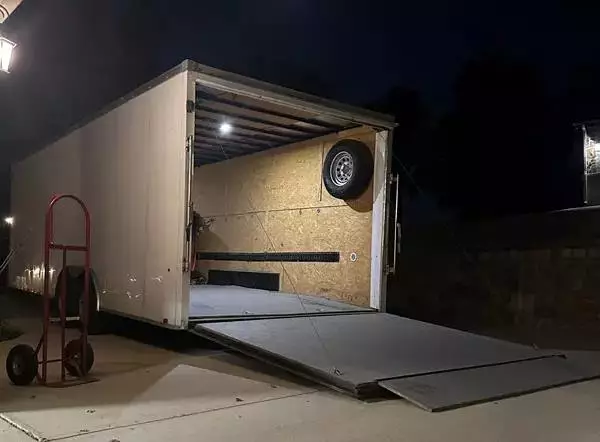
An enclosed cargo trailer protects furniture, boxes, and electronics from rain, dust, and prying eyes. The hard sides and lockable doors make overnight stops safer, which matters when a long-distance move requires hotel layovers. Most rentals come with D-rings welded to the floor and walls for tie-downs, and many have ramp doors that make loading heavy items single-handed. For owners new to enclosed rentals, this beginner's guide to choosing the right enclosed trailer rental walks through size and feature selection.
Open Utility Trailers: Light Moves and Local Hauls
For studio moves, college dorm cleanouts, and short hauls in good weather, an open utility trailer is faster to load and cheaper to rent. The trade-off is exposure: any rain on the trip means tarp-up time before you start, and overnight stops are not secure.
Box Trucks vs Trailers
A box truck rental from a national chain handles the same loads as an equivalent trailer but bundles the tow vehicle into a single rental. The numbers usually favor the trailer when you already own a capable tow vehicle, because trailer rental rates are 40 to 60 percent lower than box truck rates for the same cubic capacity. The trailer also leaves your truck free at the destination for follow-up trips.
How to Pack a Moving Trailer
Load Order Matters
Heaviest items go on the trailer floor, forward of the axle. Lighter items stack on top. Furniture goes against the walls, with cushions and soft items filling gaps. The classic load order is: appliances and dressers along the front wall, mattresses and box springs against the side walls, boxes by weight in the middle, and lightweight items on top.
The 60-Percent Rule
Roughly 60 percent of the trailer's load weight should sit ahead of the axle, with the remaining 40 percent behind. Too much weight behind the axle causes the tail to wag the dog at highway speed. Too much weight forward overloads the tow vehicle's rear axle and reduces front-tire steering grip.
Tie Downs Save Furniture
Every layer of cargo needs tie-downs, not just the top. Ratchet straps across rows of boxes prevent shifting during braking. Soft furniture should be wrapped in moving blankets before strapping. The full tie-down approach is covered in this guide to cargo tie-downs in enclosed trailers.
Protect Floors and Edges
Moving blankets between stacked items prevent scratches and dents. Corner guards on dressers and headboards protect from wall contact during transit. A roll of stretch wrap holds drawers shut and bundles loose items together for fast loading.
Towing Techniques for a Loaded Trailer
Adjust for Stopping Distance
A loaded trailer can double your stopping distance at highway speed. Leave four to six seconds of following distance, not the usual three.
Take Wide Turns
Trailers cut corners. Swing the tow vehicle wider than feels natural to keep the inside trailer wheel out of curbs and ditches.
Watch the Mirrors at Every Lane Change
Loaded trailers add 8 to 12 feet to your vehicle length and may extend a foot or more wider than the tow vehicle on each side. Check both mirrors before any lane change and account for the trailer's blind spots.
Use Lower Gears on Descents
Heavy trailers heat trailer and tow-vehicle brakes quickly on long downgrades. Drop a gear and let the engine slow the rig. If brakes start to feel spongy, pull over and let them cool before continuing.
Plan for Fuel Stops
Loaded trailers cut fuel economy 20 to 40 percent depending on the tow vehicle. Fill up earlier and more often than usual, especially in rural stretches where stations are 50+ miles apart.
Pre-Trip Checklist for Moves
Tire pressure cold, including the spare. Lug nut torque to spec. All lights working with a helper. Coupler latched and pinned. Safety chains crossed under the coupler. Breakaway battery charged and tested. Brake controller responsive. Load distributed with 60 percent forward of the axle and tie-downs ratcheted. Doors locked. Cargo inventory photographed for insurance purposes.
Long-Distance Moving: Extra Considerations
For interstate moves, plan for overnight stops in safe parking areas with lighting and security cameras. Truck-stop lots and hotel parking with surveillance are generally safer than rest areas. Carry a wheel chock to prevent rolling and a lock for the coupler when parked overnight. Confirm your auto insurance covers a rented trailer and the cargo inside it before leaving.
Frequently Asked Questions
How big a trailer do I need to move a 2-bedroom apartment?
A 7x14 enclosed cargo trailer handles most 2-bedroom moves in a single trip. Apartments with heavy furniture or shared storage may need a 7x16 or two trips with the 14-foot.
Can I tow a moving trailer with a small SUV?
Many mid-size SUVs handle trailers up to 5,000 pounds, but check your specific vehicle's sticker rating. For loaded enclosed trailers above 12 feet, a half-ton truck is usually the minimum responsible tow vehicle.
How much does it cost to rent a trailer for moving?
Daily rates run $60 to $160 for enclosed cargo trailers up to 14 feet. Larger 16- to 20-foot enclosed trailers run $120 to $250 per day. Peer-to-peer rental rates are typically 30 to 50 percent below traditional rental chains.
Do I need insurance to rent a moving trailer?
Yes. Most rental platforms require either personal auto insurance with trailer coverage, or a damage waiver added to the rental. Confirm coverage with your insurer before booking.
Should I rent an open or enclosed trailer for moving?
Enclosed is the better choice for any move involving furniture, electronics, or anything that should not get wet. Open utility trailers work for short hauls of dorm furniture, yard equipment, or weather-tolerant cargo.
Bottom Line
The best trailer for moving is the smallest enclosed cargo trailer that fits your load in one trip. Match the trailer length to home size, pack the heaviest items forward of the axle, tie everything down with ratchet straps, and run the pre-trip checklist before pulling out of the driveway. A well-packed enclosed trailer can move a 3-bedroom home with the same care and security as a professional mover, at a fraction of the cost.
Related Articles
- Complete Guide to Cargo Tie-Downs in an Enclosed Trailer
- Beginner's Guide to Choosing the Best Enclosed Trailer Rental
- Utility Trailer Rental Cargo Guide
- Safe Towing Tips With a Cargo Trailer Rental
Content updated May 2026