Top 10 Towing Risks to Remember When Pulling a Trailer
 Neighbors Trailer
Sep 14, 2023 1109 9 min read
Pulling a trailer for the first time can feel overwhelming. Even experienced drivers face new challenges when towing: extra weight, longer stopping distances, wider turns, and the constant risk of sway. The good news is that the majority of trailer towing accidents are preventable. Understanding the top risks before you hit the road is the single best thing you can do to protect yourself, your cargo, and everyone around you.
This guide covers the 10 most common and dangerous towing risks, what causes them, and exactly how to avoid them.
Prepare Before Every Trip
Most towing accidents trace back to skipped pre-trip steps. Before leaving, confirm that your hitch ball matches your trailer's coupler size, all trailer lights are working, tires on both the tow vehicle and trailer are properly inflated, and your cargo is loaded and secured correctly. A five-minute walk-around inspection can prevent hours of roadside trouble.
If you rent a trailer through Neighbors Trailer, NT Protect coverage is automatically charged to the renter at the time of booking for a few dollars per day. With a $500 deductible, this mandatory coverage means you can focus on driving safely rather than worrying about what happens if something goes wrong. Learn what to check before every rental with our Trailer Inspections guide.
The Top 10 Trailer Towing Risks
1. Incompatible Equipment
Every tow vehicle has a maximum towing capacity listed in the owner's manual. Exceeding that rating is dangerous: it can damage your transmission, suspension, and brakes, and it dramatically increases your stopping distance. Beyond weight limits, your hitch ball must match the trailer coupler size exactly. A loose or mismatched connection can allow the trailer to separate from the vehicle at speed. Before hitching up, always verify compatibility between your vehicle, hitch, and trailer.
2. Insufficient Visibility
A trailer makes your vehicle significantly longer and wider than you are used to. Standard factory mirrors often cannot give you a clear view of the trailer's sides or rear. Extended towing mirrors are essential, especially when towing a trailer that is wider than the tow vehicle. The Federal Motor Carrier Safety Administration recommends scanning 12 to 15 seconds ahead when driving to give yourself adequate reaction time on the road.
3. Speeding
A loaded trailer dramatically increases your stopping distance. The combined weight of your tow vehicle and trailer means your brakes must work much harder to slow you down. Even a modest increase in speed adds significant distance to your stopping path. Most towing professionals recommend staying at or below 55 mph on highways and slowing well below posted limits in construction zones and bad weather. Allow at least one second of following distance for every ten feet of combined vehicle and trailer length.
4. Wide Turns Done Wrong
Trailers track closer to the inside of a turn than the tow vehicle does. If you take a corner the same way you would without a trailer, the trailer wheels can clip a curb, a parked vehicle, or a signpost. Taking turns wide and slow is critical. Always watch your mirrors as you complete a turn to confirm the trailer is clearing obstacles. Practice in a large empty lot if you are new to towing.
5. Inadequate Braking Distance
Whether your trailer has its own brakes or relies entirely on the tow vehicle, your stopping distance is always greater than normal. Never tailgate when towing. On downhill grades, use your vehicle's tow/haul mode or engine braking to reduce heat buildup on the brakes. Applying the brakes abruptly can cause skidding or jackknifing, making a dangerous situation much worse.
6. Tire Blowouts
A sudden tire failure on a trailer can instantly destabilize the entire rig. Before every trip, check tire pressure on both the tow vehicle and the trailer. Look for cracks, bulges, or uneven tread wear. A blowout on a trailer tire often goes unnoticed by the driver until the vehicle starts pulling hard to one side. Keeping tires properly inflated and in good condition eliminates one of the easiest-to-prevent towing risks.
7. Using an Unsuitable Tow Vehicle
Not every vehicle is designed for towing. A tow hitch can be physically attached to many cars and SUVs, but that does not mean those vehicles have the suspension, cooling, or transmission capacity to safely pull a loaded trailer. Vehicles not designed for towing can suffer permanent mechanical damage and create dangerous situations on the road. Always confirm that your tow vehicle is rated for the weight of the trailer and load you plan to haul.
8. Improperly Loaded Cargo
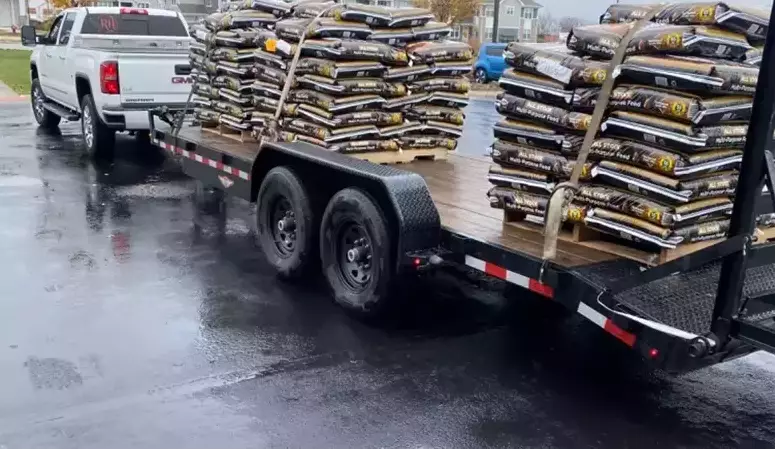
How you load your trailer is as important as how much you load. Too much weight behind the trailer axle creates a rear-heavy trailer that increases sway risk and can lift the tow vehicle's front axle, making steering and braking difficult. Too much weight forward overloads the hitch and causes the rear of the tow vehicle to sag. Follow the 60/40 rule: place 60 percent of cargo weight toward the front of the trailer and 40 percent toward the rear, balanced evenly side to side. Secure all cargo with straps so nothing shifts in transit.
9. Wear and Tear on the Tow Vehicle
Towing puts added stress on your engine, transmission, brakes, and cooling system. Even when you stay within your vehicle's towing rating, extended hauls without rest stops can cause overheating and accelerated component wear. Check fluid levels before long trips. Use tow/haul mode and engine braking on hills. Taking occasional breaks on longer hauls gives your drivetrain time to cool down and significantly extends vehicle life.
10. Trailer Sway
Trailer sway is one of the most dangerous and difficult-to-recover-from situations on the road. It starts as a gentle rocking motion and can rapidly escalate into a full uncontrollable oscillation that rolls the trailer. Common causes include rear-heavy loading, underinflated tires, excessive speed, and crosswinds from large passing trucks. If your trailer begins to sway, do not brake suddenly. Ease off the accelerator firmly but gradually, grip the steering wheel with both hands, and allow the trailer to straighten as speed decreases. Anti-sway hitches and trailer sway control bars significantly reduce risk on long-distance hauls.
For a detailed look at heavy-load towing techniques, see our Trailer Safety 101: Heavy Hauling Tips. If you are weighing your towing equipment options, our guide on tow dollies vs. car hauler trailers covers the key differences.
Towing Safety Quick Reference
| Risk Area | Key Rule | Consequence If Ignored |
| Weight limits | Never exceed tow vehicle's rated capacity | Transmission, brake, and suspension failure |
| Stopping distance | 1 second per 10 ft of combined length | Rear-end collisions |
| Cargo loading | 60% front, 40% rear of trailer axle | Trailer sway and hitch overload |
| Highway speed | 55 mph or below when towing | Loss of control and extended stopping |
| Tire pressure | Check tow vehicle and trailer before every trip | Blowouts and sudden loss of control |
| Mirrors | Use extended towing mirrors on wide trailers | Blind spots, lane change accidents |
Towing Risk Severity: What Causes the Most Accidents
NeighborsTrailer.com
Frequently Asked Questions About Trailer Towing Safety
What is the most dangerous towing mistake?
Improperly loading the trailer is one of the most dangerous and most common mistakes. A rear-heavy load significantly increases the risk of trailer sway, which is one of the hardest situations to recover from once it starts. Always load at least 60 percent of your cargo weight forward of the trailer axle and secure everything with straps.
How do I know if my vehicle can tow a specific trailer?
Check your owner's manual for your vehicle's maximum tow rating, tongue weight rating, and gross vehicle weight rating. You must stay within all three limits, not just the tow rating. When in doubt, consult a dealer or towing specialist before booking a rental. Neighbors Trailer listings clearly show trailer weight specs to help you match the right trailer to your tow vehicle.
What should I do if my trailer starts to sway?
Do not hit the brakes. Ease off the accelerator slowly, grip the wheel firmly with both hands, and let the vehicle naturally slow down. Only apply gentle brake pressure once the sway subsides. Once you are safely stopped, check your load balance, tire pressure, and hitch connection before continuing.
Do I need special mirrors for towing?
If your trailer is wider than your tow vehicle, yes. Standard factory side mirrors leave dangerous blind spots when towing. Clip-on extended towing mirrors or replacement towing mirrors provide the rear and side visibility you need. Many states legally require that you can see at least 200 feet behind your trailer, which standard mirrors often cannot provide.
Is it safe to rent a trailer as a first-time tower?
Yes, with proper preparation. Start with a smaller, lighter trailer in a low-traffic area to practice turning, braking, and backing before heading onto busy roads. Every rental on Neighbors Trailer automatically includes NT Protect, mandatory coverage charged at booking that gives you protection from the moment you drive away.
Ready to Rent? Find Your Trailer at Neighbors Trailer
The safest tow starts with the right trailer. Neighbors Trailer is a peer-to-peer marketplace connecting renters with local trailer owners across the country. With a wide inventory of utility trailers, flatbeds, enclosed trailers, car haulers, and more, you can find a well-maintained rental that matches your tow vehicle's rating and your hauling needs. NT Protect coverage is automatically included in every booking, giving both renters and owners peace of mind on every trip.
Related Articles
- Trailer Inspections: What You Need to Know Before Every Trip
- Trailer Safety 101: Tips for Towing a Motorcycle Behind Your Truck
- Trailer Safety 101: Heavy Hauling Tips for Safe Towing
- Should You Choose a Tow Dolly or a Car Hauler Trailer?
Content updated March 2026