

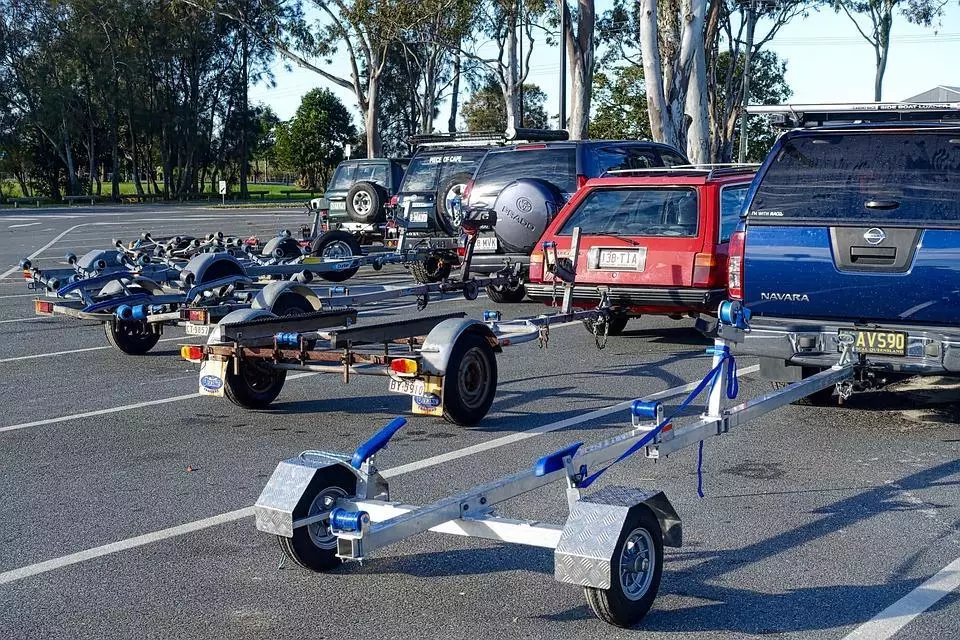
A Complete Guide for Buying a Boat Trailer
 Neighbors Trailer
Mar 11, 2023 1254 7 min read boat trailer buying guid
The Complete Boat Trailer Buying Guide: Everything You Need Before You Purchase
Buying a boat trailer is not an afterthought — it's as important as the boat itself. The wrong trailer can damage your hull, create dangerous towing conditions, and cost you significantly more in repairs and replacements than the difference in purchase price would have justified. The right trailer, sized and configured properly for your specific boat, will protect your investment for years and make every launch and recovery effortless.
This guide covers every major decision point: trailer type, weight capacity, material, bunk vs. roller systems, brakes, and the key specifications you need to match to your boat. Whether you're shopping new or used, understanding these fundamentals puts you in a position to make a confident, well-informed purchase.
The First Rule: Match the Trailer to the Boat
Every boat trailer is designed around a specific hull length, beam width, and loaded weight. Using a trailer outside these parameters — even by a modest margin — creates real risk. A trailer too short for the hull leaves the stern unsupported. A trailer too narrow concentrates load on the keel rather than distributing it across the hull. A trailer with insufficient weight capacity flexes under load, wears faster, and can fail.
Before evaluating any trailer, know these three numbers for your boat: overall length, maximum beam width, and total loaded weight (boat plus engine, fuel, gear, and water). These are the non-negotiable starting points for every other decision.
Boat Trailer Types and Their Best Applications
Bunk Trailers
Bunk trailers support the hull along carpeted wooden runners (bunks) that run parallel to the keel. They provide excellent full-length hull support and are the standard choice for fiberglass hulls, where point loads from rollers can leave stress marks. Bunk trailers work best at launch ramps where you can back into moderate water depth, as the boat must float free of the bunks rather than rolling off.
Roller Trailers
Roller trailers support the hull on a series of rubber rollers that allow the boat to be launched and retrieved in shallower water with less ramp angle. They're popular for aluminum boats and in areas with poor ramp facilities. The trade-off is that rollers concentrate weight at specific points and require frequent adjustment to stay aligned with the hull shape.
Pontoon Trailers
Pontoon trailers use a cradle-style frame designed specifically to support the parallel tubes of a pontoon boat. These trailers are not interchangeable with V-hull boat trailers. If you own or are purchasing a pontoon, your trailer must be purpose-built for that hull type.
Float-On Trailers
Float-on (or drive-on) trailers are submerged at the ramp and the boat is driven directly onto the trailer under its own power. Common for personal watercraft and some aluminum fishing boats, they make solo loading and retrieval simple and fast.
Boat Trailer Capacity and Size Reference Table
Use this table to match your boat's specifications to the appropriate trailer category. Always verify the specific trailer's rated capacity against your boat's actual loaded weight:
| Boat Length | Typical Beam Width | Min. Trailer Capacity | Recommended Trailer Type |
| Up to 16 ft | Up to 72 in | 1,500 lbs | Bunk or roller, single axle |
| 17–20 ft | 72–84 in | 2,500–3,500 lbs | Bunk, single or tandem axle |
| 21–24 ft | 84–96 in | 4,000–6,000 lbs | Bunk, tandem axle |
| 25–28 ft | 96–108 in | 6,000–8,500 lbs | Bunk, tandem or triple axle |
| 29 ft and up | 108 in+ | 8,500+ lbs | Custom or triple axle |
Single Axle vs. Tandem Axle Trailers
Single axle trailers are lighter, less expensive, and easier to maneuver in tight quarters. They're appropriate for boats under roughly 3,000 lbs loaded. For heavier boats, tandem axle trailers are the correct choice — they distribute weight more evenly, offer redundancy if a tire fails on the road, and provide noticeably better stability at highway speed. The additional cost is minimal compared to the peace of mind on longer trips.
Trailer Frame Materials: Galvanized Steel vs. Aluminum
Galvanized steel is the most common trailer material. A hot-dip galvanized frame resists corrosion well in freshwater environments and holds up adequately in light saltwater use. It's heavier than aluminum and costs less upfront.
Aluminum is the superior choice for saltwater boaters. It does not rust, adds very little tongue weight to the tow vehicle, and typically lasts longer without the corrosion issues that plague steel frames in marine environments. The higher purchase price is usually recovered in reduced maintenance costs and longer service life.
Trailer Brakes: When Are They Required?
Most states require trailer brakes when the loaded trailer weight exceeds 3,000 lbs. Beyond legal requirements, surge brakes or electric brakes are a safety necessity for anything over about 2,500 lbs. Stopping distance increases dramatically with trailer mass, and relying solely on the tow vehicle's brakes for a heavy boat trailer creates serious risk in emergency situations.
Surge brakes activate automatically via a coupler-mounted actuator when the tow vehicle decelerates — no controller required. Electric brakes require a brake controller installed in the tow vehicle and offer more consistent, adjustable stopping performance. For heavier boats with longer trips, electric brakes are generally preferred.
Key Factors Buyers Prioritize When Choosing a Boat Trailer
Survey data from boat trailer buyers consistently shows weight capacity and build quality at the top of the priority list, followed by corrosion resistance and brake specifications. The chart below reflects how buyers typically rank their top purchase consideration:
The Winch, Bow Stop, and Stern Support
The winch should be rated for at least the weight of your boat. Strap winches are standard for smaller boats; cable winches are used for heavier loads. A quality stainless or galvanized winch with a positive-lock mechanism prevents accidental release under load.
The bow stop is the pivoting rubber component at the front of the trailer that the bow seats against. It must be positioned at the correct height and angle for your hull — a misadjusted bow stop causes the boat to load unevenly and makes the trailer unstable in transport.
Stern support — whether from bunks, rollers, or a transom saver bar — prevents the outboard or I/O unit from bearing the weight of the boat during transport. A transom saver bar is inexpensive insurance against the stress fractures and gimbal damage that can result from thousands of miles of vibration.
Buying Used vs. New
A used boat trailer can be excellent value, but requires careful inspection. Look for corrosion at the frame welds — this is where failures begin. Check that the axle spindles show no scoring at the wheel bearing seats. Spin each wheel and listen for grinding indicating worn bearings. Pull the coupler lever and verify it locks cleanly. Check that the surge brake actuator moves freely and that safety chains are intact and rated appropriately. Once it checks out, the Trailer Value Calculator tells you whether the asking price matches its worth.
For freshwater-only trailers with proper maintenance history, a used galvanized trailer can offer years of additional service. Saltwater trailers carry more risk — corrosion at hidden joints and inside tubular frame members is difficult to assess from outside. If sizing up a used trailer feels like a gamble, our comparison hub helps you weigh buying against simply renting when you need one.
Protect Your Boat Trailer Investment with NT Protect
A boat trailer represents a significant investment, and repairs from road incidents, axle failures, or coupler damage can be expensive and time-sensitive — particularly mid-season when you want to be on the water. NT Protect gives Neighbors Trailer customers coverage when it matters most, for just a few dollars per day. Ask about NT Protect options when you rent or purchase through Neighbors Trailer.
Related Articles
- The Used Trailer Buying Guide
- Trailer Buying Guide: How to Choose the Right Equipment Trailer
- A Complete Guide to Understanding Trailer Classes
- How to Choose the Right Trailer Rental Size
Content updated March 2026