

How to Make Your Car Trailer Rental Stand Out With Fair Prices
 Neighbors Trailer
Oct 5, 2023 422 9 min read car trailer ren
You bought a car trailer expecting it to pay for itself. The trailer is sitting in the driveway, the listing is up on Neighbors Trailer, and yet bookings are coming in slower than you hoped. Nine times out of ten, the issue is not the trailer or the photos. It is the price. Set the rate too low and you leave real money on the table. Set it too high and renters scroll right past you. This guide walks you through how to price a car trailer rental in 2026 so you maximize bookings, earn solid passive income, and stay competitive in your local market.
The good news is that pricing is not guesswork. With a few benchmarks, a simple formula, and a willingness to adjust as you learn, you can land on a number that works for both you and your renters.
Why Fair Pricing Matters More Than Owners Think
Renters on a peer-to-peer marketplace are price-sensitive shoppers. They compare three to five listings before they book, and the platform's algorithm tends to surface listings that get the most clicks and bookings. Pricing yourself out of the running on the first scroll means your trailer never gets a chance to earn. Pricing yourself dramatically below the market means you spend just as many weekends loading and unloading without making the income you should.
The right number sits in the middle: low enough to convert browsers into renters, high enough to cover wear and tear, taxes, NT Protect coverage, and your time. Once you nail that range, your trailer can move from "occasional rental" to a steady source of monthly cash flow.
Step One: Benchmark Your Local Market
Before you set a single dollar amount, look at what comparable car trailers are renting for within roughly 25 miles of your zip code. On Neighbors Trailer, you can search by trailer type and location and see real, current daily rates. Note the deck length, axle count, age, and any features (ramps, tilt deck, winch, spare tire) on each comparable listing.
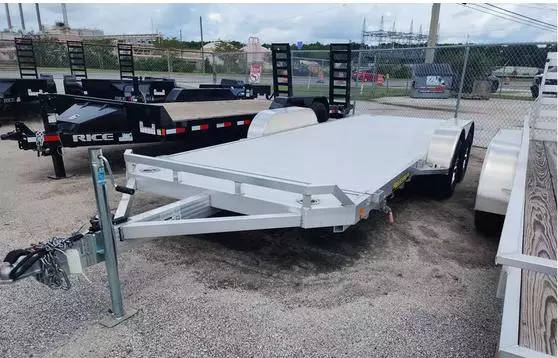
You will usually find a clear range. For a typical 18- to 20-foot open car hauler in 2026, daily rates across most U.S. metros look like this:
| Car Trailer Type | Typical Daily Rate | Weekend Premium | Best Use Case |
| 16 to 18 ft open utility hauler | $80 to $120 | 10 to 20 percent | Compact and midsize cars |
| 20 ft open hauler with electric brakes | $110 to $160 | 15 to 25 percent | Trucks, SUVs, and full-size cars |
| Tilt deck or low-profile car trailer | $140 to $200 | 15 to 25 percent | Sports cars, exotics, lowered vehicles |
| Enclosed car hauler (20 to 24 ft) | $175 to $300 | 20 to 30 percent | Classics, show cars, long hauls |
Land your base rate inside the typical range for your trailer category, then adjust up or down based on the rest of the factors below.
Step Two: Build Your Cost Floor
Your daily rate has to cover a lot more than what shows up on the deposit slip. Owners who skip this step often end up disappointed when the year-end math does not add up. Add up the real costs per rental day:
Tire wear and bearing maintenance, brake replacement on a four-year cycle, lights and wiring repairs, an annual safety inspection, registration and personal property tax, time spent meeting renters and inspecting the trailer, and a sinking fund for major repairs. For most car trailers in the 20-foot range, that comes out to roughly $25 to $40 per rental day, before profit. Anything you charge above that floor is what you actually keep.
Step Three: Stack Your Pricing Variables
Once you have a base rate and a cost floor, fine-tune up or down based on these factors that real renters care about:
Trailer Age and Condition
A clean, well-maintained five-year-old trailer with new tires can usually charge mid-range rates. A pristine one- or two-year-old unit with electric brakes, LED lights, and a winch can charge near the top of the range. A 12-plus-year-old trailer with cosmetic wear should sit at the lower end so renters feel they are getting good value.
Demand Patterns in Your Area
Car trailer demand spikes around three predictable windows: spring car-show and rally season, the late-summer college move-in months, and the winter holidays when project cars and snowbird vehicles get hauled across the country. Bumping rates 10 to 20 percent during those weeks is fair and expected. Some owners build out a simple seasonal schedule and let the calendar do the work for them. The trailer owner's guide to making money walks through how to time these seasonal premiums.
Distance From Major Metro Areas
If your trailer sits within 15 minutes of a major metro core, you can charge near the top of your bracket because pickup is easy. If you are an hour outside the metro, you may need to discount slightly or offer a delivery option to compete.
Mileage Allowances and Overage Fees
Most owners include 100 to 200 miles per day in the daily rate and charge $0.30 to $0.50 per overage mile. This protects you on long trips while keeping the headline rate competitive.
Step Four: How to Test and Adjust
Even a great starting price is just a hypothesis. Watch your listing for two weeks after you post or update the rate. Three signals tell you what to do next:
If you get steady inquiries and bookings every weekend with no complaints about price, you are in the sweet spot or possibly slightly underpriced. Try a 5 to 10 percent bump on weekend dates only. If you get plenty of profile views but very few inquiries, the price is likely too high relative to comparable listings. Trim 10 to 15 percent and watch what happens. If your trailer is booked nearly every available day for two months straight, that is a strong signal you can charge more without losing meaningful demand. Some owners review pricing every quarter using a simple business-style approach.
Step Five: Visualize Your Earning Potential
To put real numbers on this, here is what a 20-foot open car hauler can earn per month at three different daily rates, assuming a realistic 10 booked days per month and a $30 per-day cost floor:
NeighborsTrailer.com
Even a $30 difference in your daily rate compounds into hundreds of dollars per month. That is the difference between a trailer that pays for itself and one that turns into real income.
NT Protect: Built-In Coverage You Do Not Have to Worry About
One of the things that lets car trailer owners price confidently on Neighbors Trailer is that NT Protect is automatically included in every booking. There is no separate sign-up, no add-on box to tick, and no upgrade tier. Coverage costs only a few dollars per day, gets charged to the renter at checkout, and applies to both renter and owner during the rental window. If something goes sideways on a trip, you do not have to negotiate a claim with the renter directly.
That built-in protection lets you price for the value of the trailer, not for the worst-case scenario. The same logic is why pricing strategies for enclosed trailer rentals and utility trailer rentals on the platform follow the same template.
Frequently Asked Questions
How do I know if my price is too high?
Watch your listing analytics for two weeks. If you have plenty of profile views but few inquiries or bookings, your rate is likely above what comparable listings are charging in your area. Drop the price 10 to 15 percent and watch the inquiry rate over the next two weeks.
Should I offer discounts for long rentals?
Yes. A common structure is full daily rate for one to three days, 10 percent off for four to six days, and 20 percent off for a week or longer. Long rentals reduce your turnover work and lock in revenue, so the discount makes sense for both sides.
What about delivery and setup fees?
Many car trailer owners offer optional local delivery for a flat fee that covers fuel, drive time, and a buffer. A 25-mile delivery in the $40 to $75 range is typical. Charge the same for return pickup if the renter wants you to retrieve the trailer. On Trailer Bid you set that delivery charge yourself on long-term jobs and keep 100% of it on top of 80% of the rental, so the drive time is paid rather than absorbed.
Is NT Protect mandatory or optional?
NT Protect is automatically included in every booking on Neighbors Trailer. It is not optional and there is nothing extra to sign up for. The renter is charged a few dollars per day at checkout, and both renter and owner get coverage during the rental.
How often should I update my pricing?
Review every quarter at minimum, and right before each major demand season (spring rally season, late-summer move-in, holiday travel weeks). Small adjustments compound, and staying in tune with the market is what separates the top earners from the rest.
The Bottom Line
Setting a fair price on a car trailer rental is not about copying the listing next to yours. It is about benchmarking your local market, knowing your real cost floor, layering in trailer age and seasonality, and testing and adjusting every quarter. With NT Protect handling the coverage piece automatically, you can focus on the part that grows your income: getting your number right and watching your booking calendar fill up.
Related Articles
- Guide for Trailer Owners: How to Make Money With a Trailer and Be Your Own Boss
- How to Start a Trailer Rental Business vs a Better Alternative for More Profit
- Setting a Fair Price for an Enclosed Trailer Rental
- Setting a Fair Price for a Utility Trailer Rental
Content updated April 2026