

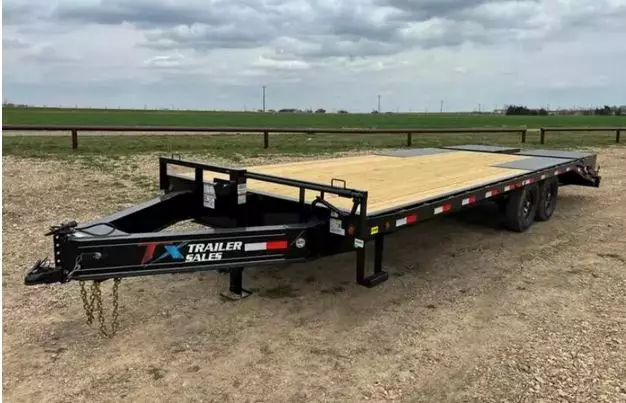
Flatbed Trailer Rental Essentials: Surge or Electric Brakes?
 Neighbors Trailer
Aug 1, 2023 632 8 min read trailer bra
Understanding Surge Brakes on Flatbed Trailer Rentals
If you have ever rented a flatbed trailer and noticed a hydraulic cylinder mounted at the trailer tongue, you were looking at a surge brake actuator. Surge brakes are one of the most common braking systems found on rental trailers, especially flatbeds and boat trailers rated between 3,000 and 12,000 pounds. Unlike electric brakes that require a brake controller installed in your tow vehicle, surge brakes operate automatically using the momentum of the trailer itself. For renters, this means simpler hookup and no special equipment needed in the cab.
This guide explains how surge brakes work on flatbed trailers, covers the key differences between surge and electric braking systems, and walks you through what to check before towing a surge-brake-equipped rental from Neighbors Trailer.
How Surge Brakes Work
Surge brakes use a hydraulic actuator built into the trailer coupler. When your tow vehicle slows down or stops, the trailer's forward momentum pushes the coupler against the hitch ball. That forward pressure compresses a master cylinder inside the actuator, which sends hydraulic fluid through brake lines to drum or disc brakes at each trailer wheel. The harder you brake, the more pressure the trailer generates, and the stronger the trailer brakes engage.
The beauty of this system is its simplicity. There is no electrical connection between the tow vehicle and the trailer brakes, no brake controller to install, and no wiring to troubleshoot. The trailer brakes itself proportionally based on how aggressively you decelerate. When you release the brake pedal in the tow vehicle, the coupler extends back to its normal position, the hydraulic pressure releases, and the trailer brakes disengage.
Surge Brakes vs Electric Brakes: What Every Renter Should Know
| Feature | Surge Brakes | Electric Brakes |
| Activation method | Hydraulic, triggered by trailer momentum | Electrical, triggered by brake controller |
| Brake controller required | No | Yes (installed in tow vehicle) |
| Proportional braking | Automatic based on deceleration force | Adjustable via controller settings |
| Reverse lockout needed | Yes (to prevent brakes engaging in reverse) | No |
| Best suited for | Boat trailers, flatbeds under 12,000 lbs | Enclosed trailers, heavy-duty hauling |
| Maintenance | Hydraulic fluid checks, brake pad inspection | Magnet and wiring inspection |
| Tow vehicle compatibility | Works with any vehicle (no special equipment) | Requires 7-pin connector and controller |
| Typical cost to repair | $150 to $400 for actuator service | $80 to $250 for controller or magnet replacement |
What to Inspect Before Towing a Surge Brake Trailer
Check the Actuator for Smooth Movement
Before you hitch up, push the coupler toward the trailer by hand. It should slide inward smoothly against the hydraulic cylinder and spring back when you release it. If the actuator feels stiff, seized, or grinds during movement, the hydraulic system may need fluid or the master cylinder could be failing. Do not tow a trailer with a malfunctioning surge brake actuator.
Verify the Hydraulic Fluid Level
Most surge brake actuators have a reservoir cap on top of the coupler housing. Remove the cap and check that the brake fluid level sits within the marked range. Low fluid indicates a possible leak in the brake lines or worn brake pads that have caused the calipers to extend further than normal. Top off with the correct DOT-rated brake fluid if needed, but investigate any significant fluid loss before driving.
Test the Breakaway System
Every surge brake trailer should have a breakaway cable and battery. The breakaway system engages the trailer brakes automatically if the trailer separates from the tow vehicle. Pull the breakaway cable pin while the trailer is parked and confirm that the wheels lock up. If they do not, the breakaway battery may be dead or the system may need service. This is a critical safety feature required by law in most states.
Inspect the Brake Pads or Shoes
If possible, visually inspect the brake components at each wheel. Look for brake pads or shoes with adequate thickness, rotors or drums free of deep grooves, and brake lines without cracks or leaks. On a rental trailer, this inspection may be limited, but any visible damage should be reported to the owner before you leave.
Tips for Driving with Surge Brakes
Towing a trailer with surge brakes feels different from towing one with electric brakes, and the adjustment period is short if you know what to expect. When you apply your vehicle brakes, there is a brief delay before the trailer brakes engage because the trailer needs to push forward against the coupler first. This is normal. Avoid pumping the brakes rapidly, as this can cause the surge brakes to engage and release repeatedly, creating a jerky ride.
On steep downhill grades, use engine braking by downshifting to a lower gear rather than riding the brake pedal for extended periods. Continuous braking generates heat in both your vehicle brakes and the trailer's hydraulic system, which can lead to brake fade. Steady, gradual braking keeps the surge system working smoothly.
When reversing, be aware that the trailer coupler compressing during backup can activate the surge brakes and make the trailer resist movement. Most surge brake actuators include a reverse lockout pin or lever that temporarily disables the brakes for backing up. Engage the lockout before reversing, and remember to disengage it before driving forward again. If you are new to towing trailers with braking systems, our guide on using a brake controller on a trailer rental covers additional braking concepts that apply to both surge and electric systems.
Common Surge Brake Issues on Rental Trailers
NeighborsTrailer.com
Renting a Flatbed Trailer with Surge Brakes on Neighbors Trailer
Many flatbed trailers listed on Neighbors Trailer come equipped with surge brakes, especially models rated above 3,500 pounds GVWR. When browsing listings, check the trailer description for brake type information. If it is not listed, message the owner before booking to confirm whether the trailer has surge brakes, electric brakes, or no brakes (common on very small utility trailers under 3,000 pounds).
Every rental on the platform includes NT Protect, which is mandatory coverage automatically charged at the time of reservation for just a few dollars per day. With a $500 deductible, NT Protect gives both renters and owners confidence that potential damage is covered. Before you tow, review our essential towing safety tips and make sure your tow vehicle is rated for the trailer's loaded weight.
Frequently Asked Questions
Do I need a brake controller for a trailer with surge brakes?
No. Surge brakes operate hydraulically using the trailer's own momentum, so no brake controller or special wiring is needed in your tow vehicle. This is one of the main advantages of surge brakes for renters who do not have a brake controller installed.
Can I back up a trailer with surge brakes?
Yes, but you need to engage the reverse lockout mechanism first. Without the lockout, the coupler compression during backup will activate the brakes and resist movement. Most surge actuators have a pin or lever on the coupler housing that disables the brakes for reversing. Always re-engage the lockout before driving forward.
How do I know if the surge brakes on a rental trailer are working?
Before leaving, push the coupler in by hand to feel for smooth hydraulic action, check the fluid level, and test the breakaway cable. During your first few minutes of driving, apply the brakes at low speed to confirm the trailer slows evenly without pulling to one side.
Are surge brakes legal for road use?
Yes. Surge brakes meet federal and state requirements for trailer braking systems. They are approved for trailers up to 20,000 pounds GVWR, although electric brakes become more common and practical above 12,000 pounds.
What happens if the surge brake actuator fails while towing?
If the actuator fails, the trailer will have no braking assistance, increasing your stopping distance significantly. The breakaway system should still engage if the trailer separates. If you notice the trailer is not braking during a trip, pull over safely, inspect the actuator and fluid level, and do not continue towing until the issue is resolved.
Tow Safely with the Right Braking Knowledge
Surge brakes make flatbed trailer rentals accessible to a wider range of tow vehicles and drivers because they require no special equipment in your cab. Understanding how the system works, what to inspect before departure, and how to drive with surge brakes gives you the confidence to haul safely on every trip. When you rent through Neighbors Trailer, you get access to quality, locally owned trailers with transparent listing details and the built-in protection of NT Protect on every reservation.
Related Articles
- How to Use a Brake Controller on a Trailer Rental
- Essential Safe Towing Tips for Trailer Rentals
- 10 Steps to Hitch Your Utility Trailer Properly
- Trailer Safety 101: Heavy Hauling Tips
Content updated April 2026