

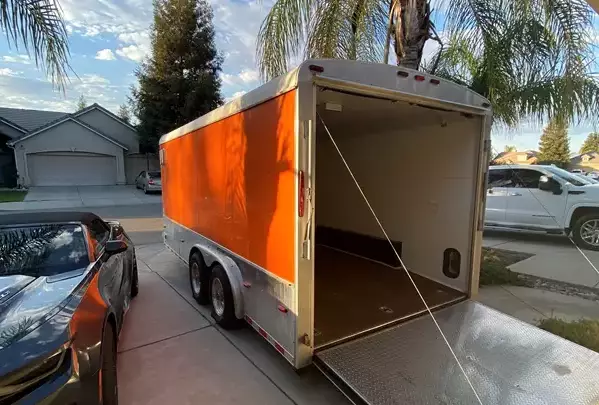
Cargo Trailer Rental Guide? 5 Essential Tips on Packing a Cargo Trailer for Your Move
 Neighbors Trailer
Feb 4, 2023 1082 11 min read packing and loading cargo trailer
A DIY move with a cargo trailer gives you control over your timeline, your costs, and the safety of everything you own. But packing a trailer incorrectly can turn a smooth move into a dangerous one. Improper weight distribution is the leading cause of trailer sway, fishtailing, and loss of vehicle control. Pack it right, and your rig handles predictably from driveway to destination. Pack it wrong, and you're fighting the trailer the entire trip. This guide covers why renting a cargo trailer beats hiring movers, how to load your trailer using proven techniques, what mistakes to avoid, and how to drive safely once you're on the road.
Every booking on Neighbors Trailer automatically includes NT Protect, mandatory coverage added at checkout for a few dollars per day. Your cargo is covered before the trailer leaves the pickup location.
Why Rent a Cargo Trailer for Your Move?
More homeowners are skipping moving companies and renting trailers instead. The reasons come down to three things: control, cost, and timing. For a closer look at how the options compare, the breakdown in DIY Moving vs. Hiring a Moving Company: Which Is Right for You? walks through the tradeoffs in detail.
Everything You Own Travels With You
When you hire professional movers, your belongings leave in their truck on their schedule. Delays happen. Items get separated. You can arrive at your new home days before your furniture does. With a cargo trailer hooked to your tow vehicle, everything travels with you. You unload the same day you arrive and start setting up immediately.
Significant Cost Reduction
Professional movers charge for labor, fuel, equipment, and often add surcharges on top. Moving truck rentals from national chains add per-mile fees that pile up fast on cross-state moves. When you rent a trailer through Neighbors Trailer, you pay the daily rental rate and a small booking fee. No mileage charges, no hidden fees, and no separate trip in your personal vehicle burning extra fuel.
Your Cargo, Your Standards
You know which pieces are fragile, which boxes contain valuables, and how everything should be handled. When professional movers rush through a job, that context gets lost. When you pack and drive your own trailer, nothing gets treated as just another box.
Before You Load: Understanding Weight Distribution
The single most important concept in trailer loading is weight distribution. An improperly balanced trailer pushes or pulls your tow vehicle in unpredictable ways. At highway speed, that instability can cause trailer sway, which quickly becomes uncontrollable if you react with hard braking. Understanding how your tow vehicle's rated capacity interacts with the total loaded weight is essential before you put a single box in the trailer. See the full explanation in Trailer Towing Capacity Explained: GVWR, GCWR, and Payload.
The target for an enclosed cargo trailer is the 60/40 rule: place approximately 60 percent of your total cargo weight in the front half of the trailer, nearest the hitch, and 40 percent in the rear half. This creates positive tongue weight, which keeps the trailer tracking straight behind your vehicle. Too much weight at the rear creates negative tongue weight, which is what causes the dreaded fishtail. Before you start loading, take stock of your heaviest items and plan where they will land.
How to Pack a Cargo Trailer: Step-by-Step
Follow these steps in sequence. Each one builds on the previous. Skipping steps or loading randomly turns your trailer into a hazard.
| Step | What to Do | Item Examples | Why It Matters |
| 1. Inventory | List everything by weight and size | All household items | Plan placement before loading starts |
| 2. 60/40 Placement | Heavy items in front 60%, lighter in rear 40% | Appliances, furniture, tools | Prevents trailer sway and fishtailing |
| 3. Heavy Items First | Load dense, bulky items against front wall | Refrigerator, washing machine, dressers | Low center of gravity, stable base for stacking |
| 4. Long Items Upright | Stand long items vertically against walls | Headboards, mattresses, rolled carpets, tables | Saves floor space, easier to secure to wall rails |
| 5. Secure with Straps | Ratchet strap heavy items to tie-down points | All furniture and appliances | Prevents shifting that throws off weight balance |
| 6. Fill Gaps with Light Items | Boxes, bags, soft goods in remaining space | Clothes, pillows, kitchen boxes | Uses space efficiently and cushions heavier items |
| 7. Secure Light Items | Strap or wedge boxes in place | All remaining boxes and bags | Prevents shifting and damage during transit |
A Note on Securing Cargo
Straps are not optional. Even well-placed heavy items can shift during hard braking, sharp turns, or highway lane changes. Use ratchet straps rated for the weight of the items you're securing, and connect them to the trailer's built-in tie-down rings, not to the items themselves. For a detailed walkthrough of strap types, anchor points, and securing techniques, the Complete Guide to Tiedowns for Enclosed Trailer Rentals covers everything you need before loading day.
What to Keep in the Tow Vehicle
High-value electronics, fragile items, and anything irreplaceable should ride in your vehicle's cab or bed, not in the trailer. Computers, TVs, artwork, and jewelry belong with you where you can control temperature, vibration, and security. Do not leave valuables in an unattended trailer at overnight stops.
Estimated Cargo Weight by Household Category (2-Bedroom Move)
NeighborsTrailer.com
For a typical 2-bedroom move, total cargo weight runs approximately 2,800 lbs. That puts most loads squarely in the range of a 6x12 to 7x14 enclosed trailer. Bedroom furniture and living room pieces are the heaviest categories and should load first against the front wall. Boxes, bins, and clothing fill the remaining space around and above them.
Common Packing Mistakes to Avoid
Loading Too Heavy at the Rear
The most dangerous packing error is concentrating heavy items at the back of the trailer. This creates negative tongue weight, which lifts the rear of your tow vehicle and causes the trailer to push sideways at speed. If you feel the back of your vehicle moving at highway speed, you have a weight balance problem that needs fixing before you continue.
Going Top Heavy
Stacking light items underneath heavy ones raises the center of gravity and creates a tipping risk, especially on curves. Always put the heaviest items on the floor and build upward with progressively lighter cargo.
Not Securing Items Between Loading Steps
Some people pack the entire trailer and then try to strap everything at once. By the time you reach the back half, the front items may have already shifted. Secure each section as you go, especially the heavy furniture loaded in steps 3 and 4.
Overloading the Trailer
The trailer's rated payload is not a suggestion. Overloading stresses axles, tires, and the hitch connection, and creates a legal liability if you are stopped at a weigh station. Always check the VIN sticker on the trailer for its actual payload rating before loading.
Safe Driving With a Fully Loaded Cargo Trailer
A properly packed trailer is only part of the equation. How you drive with it determines whether the trip goes smoothly. A loaded trailer changes your vehicle's handling in every dimension: braking distance increases, turning radius expands, and crosswinds have more surface area to push against. For a comprehensive look at towing techniques, Essential Safe Towing Tips With a Cargo Trailer Rental is worth reading before your move day.
Reduce Speed and Extend Your Following Distance
The added weight of a fully loaded trailer significantly increases your stopping distance. At 55 MPH, a loaded trailer adds hundreds of feet to your braking distance compared to driving without one. Stay well below posted speed limits when hauling and maintain at minimum 8 to 10 seconds of following distance behind the vehicle ahead.
Brake in a Straight Line Whenever Possible
Braking in a curve while towing is one of the most dangerous maneuvers you can make. The trailer continues pushing forward while your vehicle slows, creating the conditions for a jackknife. Plan ahead, begin braking early, and aim to be at your target speed before you enter any curve.
Turn Wide at Corners
A trailer's rear wheels track inside the path of your tow vehicle's rear wheels. When you turn too tightly, the trailer clips curbs, medians, or other vehicles. Watch your mirrors through every turn and swing wide enough to give the trailer's rear corners clearance.
Stay Right on Highways
Drive in the right lane on multi-lane roads. This keeps you closer to the shoulder for emergencies, away from faster traffic, and gives other drivers room to pass safely. Avoid lane changes unless necessary, and signal early and move slowly when you do need to change lanes.
Inspect at Every Stop
On any trip longer than two hours, pull over and do a quick visual inspection at each stop. Check that the hitch coupler is locked, safety chains are intact, all trailer lights are working, tire pressures look normal, and cargo has not shifted inside. Five minutes of inspection prevents multi-hour roadside problems. If you are doing a long-distance move specifically, the guide on Tips for a Cargo Trailer Rental Long Haul Trip covers multi-day haul logistics in detail.
Practice Before You Go
If you have never towed a trailer before, drive your loaded rig around an empty parking lot before heading to the highway. Get a feel for how wide you need to swing turns, how far back you need to stay for safe braking, and how much the trailer affects your normal acceleration. Ten minutes of practice prevents ten hours of anxiety on the road.
Frequently Asked Questions About Packing a Cargo Trailer for a Move
What is the 60/40 rule for trailer loading?
The 60/40 rule means placing 60 percent of your total cargo weight in the front half of the trailer, closest to the hitch, and 40 percent in the rear half. This creates positive tongue weight that stabilizes the trailer behind your tow vehicle. Reversing this ratio, or concentrating weight at the rear, creates trailer sway that can lead to loss of control.
What goes in first when loading a cargo trailer?
The heaviest and largest items go in first, placed on the floor against the front wall. Appliances, dressers, and heavy furniture form the base layer. Long items like headboards and mattresses stand upright against the side walls. Light items and boxes fill the remaining space and go in last.
How do I prevent my cargo from shifting during the move?
Use ratchet straps to anchor heavy items to the trailer's tie-down rings before adding lighter cargo on top. Stack boxes tightly so they support each other. Fill any gaps with soft goods like pillows and clothing to cushion items and prevent movement. Avoid leaving large open spaces where boxes can slide.
Should I leave fragile items in the trailer?
No. Fragile and high-value items such as electronics, artwork, and anything with sentimental value should ride inside your tow vehicle's cab. Trailers experience more vibration and temperature variation than the vehicle interior, and there is no way to monitor cargo once the trailer doors are closed and you are driving.
How does NT Protect work on a cargo trailer rental?
NT Protect is mandatory coverage automatically added to every Neighbors Trailer booking at a few dollars per day. It applies from the time you pick up the trailer. You do not need to select it or opt in. It covers the rental period from start to finish.
Find a Cargo Trailer Rental on Neighbors Trailer
Neighbors Trailer is a peer-to-peer trailer rental marketplace with listings across the country. Browse by size, type, and location to find an enclosed cargo trailer near you. Every rental automatically includes NT Protect, mandatory coverage for a few dollars per day. Search for the right trailer for your move, confirm pickup logistics with the owner, and book directly through the platform.
Related Articles
- Complete Guide to Tiedowns for Enclosed Trailer Rentals
- DIY Moving vs. Hiring a Moving Company: Which Is Right for You?
- Essential Safe Towing Tips With a Cargo Trailer Rental
- Trailer Towing Capacity Explained: GVWR, GCWR, and Payload
Content updated March 2026