

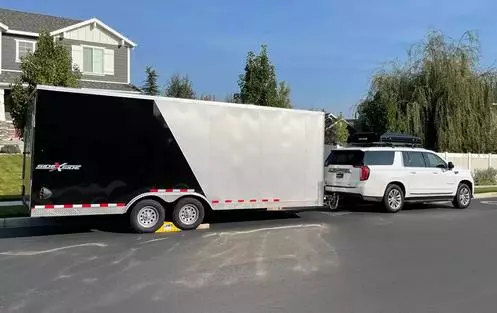
Learn the Steps to Install a Hitch Lock on Your Cargo Trailer
 Neighbors Trailer
Mar 29, 2024 612 8 min read Cargo Trailer Renta
The Cargo Trailer Hitch Lock Guide
Cargo trailer theft is one of the fastest and quietest crimes in the country. A pro can hitch up an unattended trailer in under 60 seconds, and most stolen trailers are never recovered. The single biggest deterrent is a quality hitch lock. It costs less than a tank of gas, takes 30 seconds to install, and turns your trailer from a target into a problem worth skipping. This guide walks through the types of hitch locks, how to install them properly on a coupler or receiver, what to look for when buying, and the security habits that make any lock more effective.
Why a Hitch Lock Is Worth It
Insurance data is brutal here: cargo trailer theft has climbed every year for the last decade, with peak seasons in spring and fall when contractors leave loaded trailers parked on jobsites overnight. A well-installed hitch lock will not stop a determined thief with hours and a torch, but it will stop a casual snatch in seconds. Most stolen trailers are taken in less than 90 seconds; a lock that adds 5 to 10 minutes to the job is enough to make a thief walk away.
Two Different Locks for Two Different Threats
There are two scenarios you protect against, and they need different locks. When the trailer is parked and unhitched, you need a coupler lock to prevent someone from dropping the trailer onto a ball and driving off. When the trailer is hitched to your truck, you need a receiver lock or hitch pin lock so a thief cannot pull the pin, drop the trailer onto their hitch, and unhook from there. Most owners need both.
The Three Main Types of Hitch Locks
1. Coupler Locks (Trailer Parked)
A coupler lock fills the ball socket on the trailer's coupler so no ball can be inserted. Some lock around the entire coupler with a steel collar, others slide a plug into the socket and lock from the side. Either style works if it is rated for your coupler size (1 7/8, 2, or 2 5/16 inch). Brass-bodied or hardened steel models resist attack better than die-cast.
2. Receiver Locks (Trailer Hitched)
A receiver lock replaces the standard hitch pin in your tow vehicle's receiver. It looks identical to a regular pin but uses a key-locked head. Once installed, a thief cannot pull the pin to remove the ball mount and steal the trailer separately from the truck. Look for 5/8 inch pin diameter for class III and IV receivers; 1/2 inch for class I and II.
3. Coupler Pin Locks (Coupler Latch)
The coupler latch holds the ball socket closed around the hitch ball. A coupler pin lock replaces the latch's stock pin or wire clip with a key-locked alternative. This stops a thief from simply lifting the latch and pulling the trailer off your hitch ball while you are inside a gas station.
Lock Comparison: What to Buy
| Lock Type | Protects Against | When to Use | Typical Price | Top Brands |
| Coupler Lock | Hitching trailer to thief's truck | Trailer is parked unhitched | $25 to $90 | Master Lock 377DAT, Trimax UMAX100, Reese Towpower 7088300 |
| Receiver Lock | Removing ball mount with trailer attached | Trailer is hitched to your truck | $15 to $40 | CURT 23022, Master Lock 1469DAT, Reese Towpower 7000300 |
| Coupler Pin Lock | Lifting latch and lifting trailer off ball | Either parked or hitched | $10 to $25 | Master Lock 379DAT, Trimax TC123 |
How to Install a Coupler Lock (Step-by-Step)
Most coupler locks install in under a minute. The process below covers the universal puck style that fits most 2-inch couplers; collar-style locks vary slightly but follow the same idea.
1. Park the trailer on level ground and lower the tongue jack so the coupler sits at a comfortable working height.
2. Lift the coupler latch all the way up.
3. Insert the lock body into the ball socket so it fully fills the cavity.
4. Lower the latch back down over the lock body.
5. Insert the locking pin or shackle through the latch hole and into the lock body.
6. Turn the key to lock, then pull on the coupler latch to confirm it cannot lift.
Always test the lock by trying to lift the latch and by attempting to drop a hitch ball into the socket. If either works, the lock is the wrong size or installed incorrectly.
How to Install a Receiver Lock (Step-by-Step)
This one is even simpler:
1. With the trailer hitched, remove the standard hitch pin from your receiver.
2. Slide the receiver lock through the same hole until the head is flush with the receiver tube.
3. Place the lock washer or backing collar on the protruding end (most kits include it).
4. Turn the key to lock the head into place.
5. Pull on the ball mount; it should not move.
If your receiver lock comes with a weather cap for the keyhole, use it. Salt and grit kill cylinder locks fast on a working trailer. Speaking of trailer setup, our drop hitch guide covers the rest of the receiver hardware most owners run.
What to Look For When Shopping
Lock body material matters most. Solid brass and hardened steel resist drilling, hammering, and bolt cutters. Die-cast zinc looks similar but breaks open in a few seconds with a hammer. Stick to named brands like Master Lock, Trimax, CURT, and Reese; off-brand listings on third-party marketplaces are a coin flip on quality.
Weather sealing is the second priority. Look for keyway covers, rubberized casings, or stainless steel components. A lock that seizes the first time water gets in is worse than no lock at all because you cannot move your own trailer.
Key control is the third. Higher-end locks come keyed-alike on request, so all your trailers and ball mounts use the same key. That matters more than people realize when you have a fleet or you tow more than one rig.
Theft Trends: What the Numbers Say
Cargo trailer theft is concentrated in a handful of high-traffic categories. The chart below shows where most thefts happen, based on insurance industry data for 2024 and 2025.
NeighborsTrailer.com
Construction sites and truck stops account for more than 60 percent of all reported thefts. If your trailer regularly sits in either of those locations, a hitch lock is not optional, it is essential. Pair the lock with a wheel boot or wheel chock-style lock for the highest-risk overnight stays.
Five Habits That Make Any Lock More Effective
Park defensively. Back the trailer against a wall, fence, or another vehicle so the coupler is hard to access.
Use multiple locks. Coupler lock plus wheel boot is the gold standard for overnight parking.
Hide the trailer. Out of sight, out of mind. A trailer in a garage or behind a fence is far less likely to be hit.
Mark and photograph. Take VIN photos, snap the trailer from all angles, and store the images in cloud storage so you have evidence if something does go missing.
Add GPS tracking. A $30 cellular tracker hidden in the trailer's frame can recover stolen trailers in hours instead of never. Pair it with the right hitch ball setup from our adjustable hitch guide.
FAQ
Will a hitch lock fit any trailer?
No. Hitch locks are sized to coupler size. The most common cargo trailer coupler is 2 inch, but 1 7/8 and 2 5/16 are also common. Match the lock to the size stamped on your coupler.
How long does a hitch lock take to install?
Under 60 seconds for any of the three main types after the first install. The first time you fit it, give yourself five minutes to read the instructions.
Can a hitch lock be cut off?
Yes, with the right tools and time. Bolt cutters, an angle grinder, or a torch will defeat any consumer-grade lock eventually. The point of the lock is to add enough time and noise that a thief moves on to an easier target.
Should I lock the trailer when it is hitched to my truck?
Yes. A receiver lock and a coupler pin lock together stop a thief from unhitching your trailer at a fuel stop or restaurant. Without those, anyone can drop your trailer off your ball in 10 seconds.
Do I need a separate key for every lock?
No. Most major brands sell keyed-alike sets so a single key opens all your locks. Order matched sets when you buy.
Bottom Line
A hitch lock is the cheapest, easiest security upgrade you can make to a cargo trailer. Buy a quality coupler lock for parking, a receiver lock for when the trailer is hitched, and use both consistently. Add a wheel boot for overnight stays in high-risk areas, and a hidden GPS tracker for the worst case. Spend $50 to $150 today and you eliminate the most common, fastest theft scenarios entirely. If you are renting through Neighbors Trailer, ask the owner whether a lock is included; many provide one with the rental.
Related Articles
- Cargo Trailer Rental Best Hitch Lock
- Enclosed Trailer Rental Hitch Lock Guide
- Enclosed Trailer Rental Top Hitch Lock
- Cargo Trailer Rental Safety Tips
Content updated May 2026