Trailer Maintenance Tips? How You Can Extend the Life of Your Trailer Tires
 Neighbors Trailer
Jan 24, 2023 313 11 min read
Trailer tires are one of the most overlooked and most critical components on any trailer. Unlike passenger vehicle tires that benefit from engine-driven steering adjustments and active suspension systems, trailer tires follow passively behind the tow vehicle, absorbing every bump, turn, and load shift without any ability to self-correct. This unique stress profile means trailer tires wear differently, fail differently, and require a maintenance approach that most vehicle owners never learned.
At NeighborsTrailer.com, we see the consequences of neglected trailer tires regularly. Blown tires on the highway, uneven wear that ruins a set in half its expected lifespan, and dry rot on trailers that sit too long between uses are all preventable problems. This guide covers everything you need to know about maintaining your trailer tires, from inflation and load management to storage, rotation, and knowing when replacement is overdue.
Why Trailer Tires Are Different from Vehicle Tires
Before diving into maintenance, understanding what makes trailer tires unique helps explain why they need specialized care. Trailer tires are designated with an "ST" (Special Trailer) rating and are engineered with stiffer sidewalls than passenger (P) or light truck (LT) tires. This stiffer construction helps them handle heavy vertical loads and resist the lateral forces that occur during turns and lane changes. The rubber compounds used in ST tires are also formulated differently to prioritize load-bearing capacity and heat resistance over ride comfort.
Because of these design differences, you should never substitute passenger vehicle tires on a trailer. P-rated and LT-rated tires have more flexible sidewalls that can lead to dangerous trailer sway under heavy loads. They also tend to run hotter under constant load conditions, increasing the risk of blowouts. Always replace trailer tires with the correct ST-rated tires in the size and load range specified by the trailer manufacturer. For a deeper look at selecting the right replacements, our guide on choosing the right tires for your trailer walks through every specification you need to match.
Tire Pressure: The Single Most Important Maintenance Task
Incorrect tire pressure causes more trailer tire failures than any other factor. Underinflated tires flex excessively, generating heat that breaks down the rubber from the inside out. This heat buildup accelerates with speed and load, which is why highway blowouts on underinflated trailer tires are so common. Underinflation also causes the outer edges of the tread to wear faster than the center, reducing tire life by 25 percent or more.
Overinflated tires create a different set of problems. The tire's contact patch shrinks to just the center of the tread, causing accelerated center wear and reducing traction. Overinflated tires also transmit more shock into the trailer frame and suspension, loosening fasteners and stressing welds over time. The ride becomes harsher, and the tires are more vulnerable to punctures and impact damage from road debris.
Check tire pressure before every trip using a reliable gauge. The correct pressure is printed on the tire sidewall as the maximum inflation pressure for the rated load. Unlike passenger vehicles where you reference the door sticker, trailer tires should generally be inflated to their maximum rated pressure when carrying loads near their capacity. Always check pressure when tires are cold, meaning the trailer has not been towed in the last three hours. Pressure readings on warm tires run 10 to 15 percent higher than cold readings and will give you a false sense of proper inflation.
| Tire Condition | Impact on Tread Life | Blowout Risk | Fuel Economy Effect | Wear Pattern |
| 20% underinflated | 25 to 30% shorter life | High | 3 to 5% worse | Outer edge wear |
| 10% underinflated | 15 to 20% shorter life | Moderate | 1 to 3% worse | Slight outer wear |
| Correctly inflated | Full rated lifespan | Low | Optimal | Even across tread |
| 10% overinflated | 10 to 15% shorter life | Low to moderate | Minimal change | Center wear |
| 20% overinflated | 20 to 25% shorter life | Moderate | Minimal change | Heavy center wear |
How tire inflation levels affect tread life, blowout risk, fuel economy, and wear patterns on trailer tires. Source: NeighborsTrailer.com
Load Management and Weight Distribution
Every trailer tire has a maximum load rating stamped on the sidewall, and exceeding it is one of the fastest paths to tire failure. The load rating applies per tire, so a tandem-axle trailer with four tires rated at 2,000 pounds each has a combined tire capacity of 8,000 pounds. However, this assumes perfectly even weight distribution across all four tires, which rarely happens in practice.
Uneven loading shifts extra weight onto certain tires while underloading others. The overloaded tires run hotter and wear faster, while the underloaded tires may develop flat spots from sitting under less pressure than designed. When loading your trailer, distribute weight as evenly as possible from side to side and place heavier items low and centered between the axles. Aim for 10 to 15 percent of the total loaded trailer weight on the tongue for proper towing balance. Following the ultimate trailer towing safety guide helps you get weight distribution right every time.
Tire Rotation for Tandem-Axle Trailers
Tandem-axle trailers develop uneven tire wear because the front and rear axle tires experience different forces. The front axle tires tend to wear more on their front edges due to scrubbing during turns, while the rear axle tires wear more evenly but may develop flat spots if the trailer sits for extended periods. Rotating tires from front to rear axle every 5,000 to 8,000 miles helps equalize wear across all four tires.
When rotating, move the front tires straight back to the rear axle and the rear tires forward. Do not cross tires from side to side unless the tires are non-directional. After rotation, recheck and adjust tire pressure, as different positions may call for different loads depending on your typical cargo distribution. Keep a rotation log with dates and mileage to maintain a consistent schedule.
Storage and Dry Rot Prevention
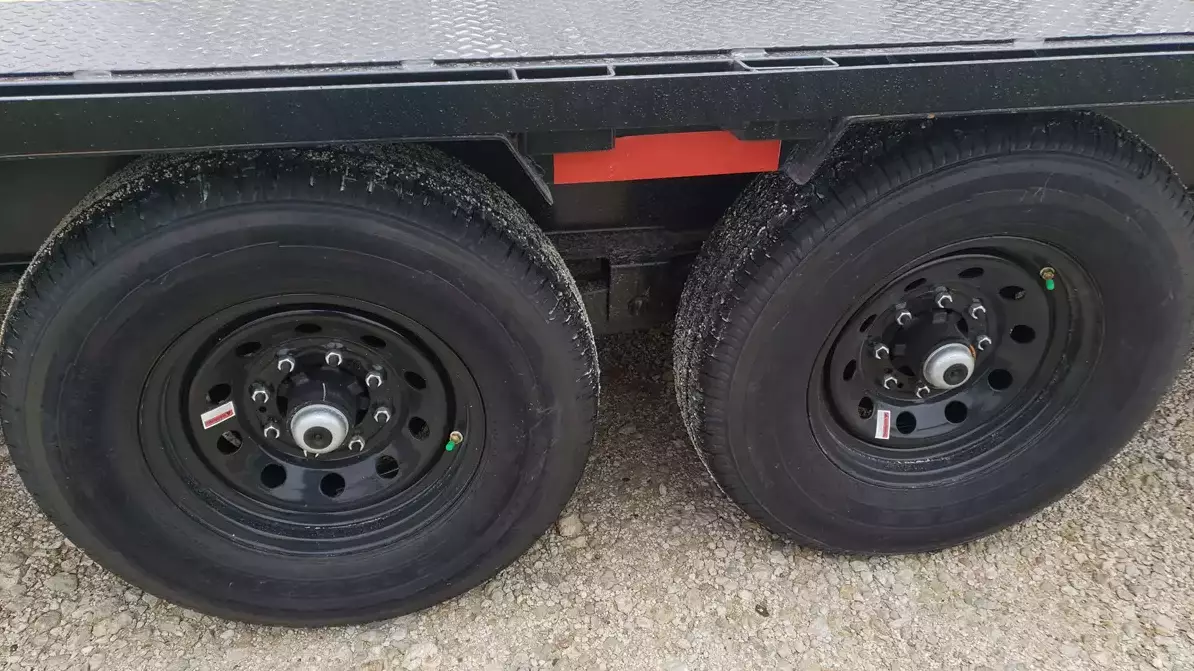
Trailer tires that sit unused for weeks or months face a different enemy: dry rot. Ultraviolet radiation from sunlight breaks down the rubber compounds over time, causing surface cracks that deepen into structural failures. Ozone exposure, temperature extremes, and chemical exposure from road salts or petroleum products accelerate this degradation. A trailer tire can develop dangerous dry rot in as little as three to four years even if the tread still looks new.
When storing your trailer for extended periods, park it on a paved or gravel surface rather than grass or bare soil, which retains moisture. Cover the tires with UV-protective tire covers or park the trailer in a covered structure. If possible, elevate the trailer on jack stands to remove weight from the tires during storage. This prevents flat spots and reduces sidewall stress. Move the trailer forward or backward a few inches every month if it cannot be elevated, so the same spot on each tire is not bearing the full load continuously. Our guide on preventing dry rot in trailer tires covers additional protective measures worth taking.
Distribution of trailer tire failure causes based on industry service data. Underinflation and overloading account for over half of all failures. Source: NeighborsTrailer.com
Wheel Bearings and Their Impact on Tire Life
Wheel bearings might not seem directly related to tire maintenance, but failing bearings cause uneven tire wear, wheel wobble, and in extreme cases, wheel separation. When bearings start to fail, the wheel develops play that causes the tire to contact the road at inconsistent angles. This leads to cupping or scalloping wear patterns that cannot be corrected by rotation alone.
Inspect and repack wheel bearings at least once per year or every 12,000 miles. If your trailer is regularly submerged during boat launching, bearings should be serviced more frequently because water intrusion washes out grease. Bearing buddy caps or oil bath hubs provide better protection against water contamination. Listen for grinding or humming noises while towing, and check for excessive wheel play by jacking up each wheel and rocking it top to bottom. Any noticeable play indicates bearings that need immediate attention. Our detailed guide on servicing trailer wheel bearings explains the full inspection and repacking process.
When to Replace Trailer Tires
Even with perfect maintenance, trailer tires have a finite lifespan. Most tire manufacturers recommend replacing trailer tires every three to five years regardless of tread depth, because the rubber compounds degrade over time and lose their structural integrity. Check the DOT date code on the sidewall to determine when the tire was manufactured. The last four digits indicate the week and year of production. A code reading "2522" means the tire was made in the 25th week of 2022.
Beyond age, replace tires when tread depth reaches 2/32 of an inch (the legal minimum in most states) or when you notice any of the following: sidewall cracks or bulges, exposed cords or fabric, uneven wear that cannot be corrected by rotation, persistent slow leaks, or any visible damage from road hazards. When replacing tires, always replace in complete axle sets. Mixing old and new tires on the same axle creates differences in diameter and grip that cause handling problems and accelerate wear on both tires.
Offset Maintenance Costs with Rental Income
Trailer maintenance is an ongoing expense, and tires represent one of the larger recurring costs. A full set of quality ST tires for a tandem-axle trailer can run $400 to $800 or more. But your trailer does not have to sit idle between your own jobs, slowly deteriorating while earning nothing. Listing it on Neighbors Trailer turns those idle days into rental income that more than covers your maintenance budget.
Depending on your trailer type and location, rentals generate $75 to $200 per day. Even renting just a few days per month covers your annual tire, bearing, and brake maintenance costs with money left over. Every reservation through Neighbors Trailer includes NT Protect coverage automatically, which costs just a few dollars per day and protects both you and the renter against unexpected damage. You keep 100 percent of the rental fee, and creating a listing is completely free. Keeping your trailer well maintained and ready for spring towing season also helps you attract more bookings and command better rates.
Frequently Asked Questions
How often should I check trailer tire pressure?
Check tire pressure before every trip, every time. Trailer tires can lose 1 to 2 PSI per month just from natural permeation, and temperature swings of 10 degrees Fahrenheit change pressure by about 1 PSI. A tire that was properly inflated last month may be significantly underinflated today. Invest in a quality digital tire pressure gauge and keep it with your trailer.
Can I use nitrogen instead of air in my trailer tires?
Yes, nitrogen maintains more consistent pressure across temperature changes because it contains less moisture than compressed air. Nitrogen-filled tires lose pressure more slowly, which is beneficial for trailers that sit between uses. However, the practical difference is modest, and regular air with proper monitoring works perfectly well for most trailer owners.
What speed should I drive to maximize trailer tire life?
Most ST-rated trailer tires are rated for a maximum sustained speed of 65 mph. Driving faster generates more heat and accelerates wear. Keeping your towing speed at or below 65 mph, especially in hot weather and with heavy loads, significantly extends tire life and reduces blowout risk. Some tire manufacturers now offer higher speed-rated ST tires for highway use.
Should I buy radial or bias-ply trailer tires?
Radial trailer tires generally offer longer tread life, better heat dissipation, improved fuel economy, and a smoother ride. Bias-ply tires have stiffer sidewalls that resist damage from curbing and off-road conditions better, and they cost less. For highway towing, radial tires are usually the better choice. For off-road or rough terrain use, bias-ply may be more practical. Never mix radial and bias-ply tires on the same trailer.
How can I tell if my trailer tires have dry rot?
Look for small cracks in the sidewall, especially around the lettering and near the bead area where the tire meets the rim. Early dry rot appears as fine surface cracking. Advanced dry rot shows deeper cracks and may include sections where the rubber feels brittle or crumbly. If you can see any cracking that extends into the rubber beyond the surface, the tires should be replaced regardless of remaining tread depth.
Related Articles
- How to Choose the Right Tires for Your Trailer
- Why Servicing Trailer Wheel Bearings Matters
- How to Prevent Dry Rot in Trailer Tires
- Ultimate Trailer Towing Safety Guide
Content updated March 2026