A Complete Glossary of Important Trailer Terms
 Neighbors Trailer
May 10, 2023 1100 11 min read trailer education
Whether you already own a trailer, plan to buy one, or get a trailer for rent, it is essential to understand where you are spending your money. When it comes to towing, knowing what your options are is crucial. However, you must also familiarize yourself with the different types, parts, accessories, and terms you must know about trailer towing. Whether you get a car trailer rental, buy a flatbed trailer, or a utility trailer, knowing what you are operating is essential. When you fully understand your trailer and its components, towing it can become a streamlined and safer experience. Getting a good trailer education when you start your journey can go a long way in helping you enjoy a better trailer-towing experience.
At Neighbors Trailer, we are on a mission to make trailer rentals easier for everybody. In general, renting trailers can be a challenging experience for businesses and individual renters. Finding high-quality trailers for rent is difficult if you do not know where to look. With thousands of underutilized trailers available nationwide, there is no shortage of trailer rentals. The only issue is renters being able to connect with private owners.
Through our platform, trailer owners with underutilized trailers can help businesses and individual renters in their communities. With Neighbors Trailer, people looking to rent a trailer can find good quality rentals near them. For the owners on the platform, they get the opportunity to help others while making money.
As a part of our mission to make the trailer rental experience better, we also create helpful guides to educate all trailer users. To this end, this trailer education guide can bring those new to towing up to speed with the essentials. We have created a complete glossary of important trailer terms you must know.
Important Trailer Towing Terms You Must Know
Axle
The axle is a component in the undercarriage of a trailer and vehicles. It is a term referring to the bar, shaft, or pin on which a pair of wheels rotate.
Ball Mount
Also called the drawbar, the ball mount is an important component of a trailer. This is a removable platform that you can slide into a hitch receiver and secure it using a pin and a clip. By using different ball mounts, you can raise or lower the height of the tow ball. This way, it is possible to adjust the height of the coupling to level the trailer being towed.
Bull-Nose Trailer
A bull nose trailer is a type of trailer featuring a neck with rounded front corners. Due to the rounded shape of the front corners, the trailer has a better angle to provide more swing clearance.
Bumper-Pull Trailer
A bumper-pull trailer is a term that refers to trailers featuring a bumper-pull hitch. The bumper-pull hitch system is the traditional hitch found on most trailers. Bumper-pull trailers attach to a traditional hitch and ball that is connected to the frame or bumper of a tow vehicle.
Car Trailer or Car Hauler Trailer
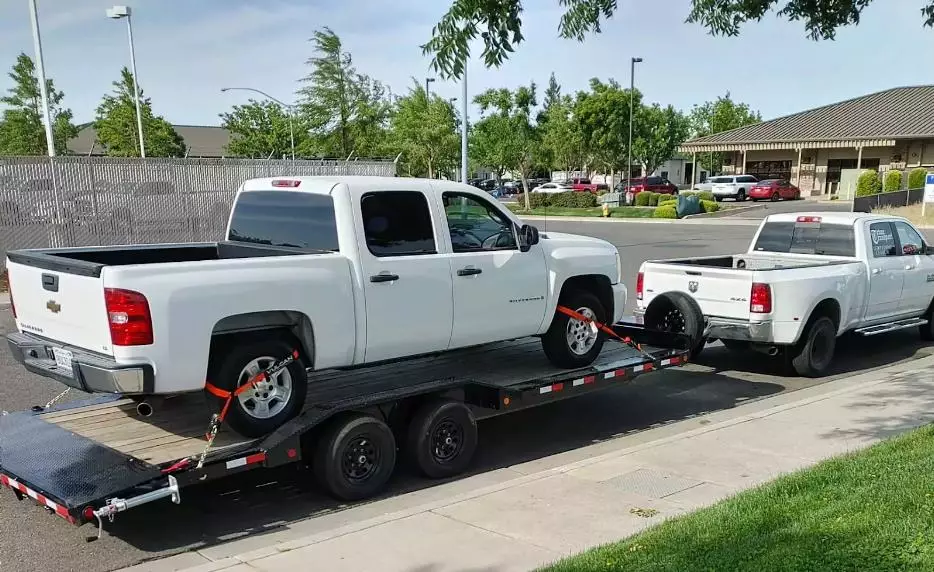
Also called an auto transport hauler trailer, a car hauler trailer is a type of trailer designed to transport other vehicles. Car hauler trailers can come in various shapes and sizes, from open-bed designs to enclosed designs. These trailers come with built-in ramps designed to allow easier loading and unloading of vehicles from the trailer.
Cargo Trailer
Also called an enclosed trailer, a cargo trailer is a type of trailer that is covered on all sides. These trailers typically feature a roof and walls. Most cargo trailers feature a side door and one located at the rear. Many cargo trailers designed to transport vehicles also have E-Track systems and ramps to make it easier to haul vehicles.
Converter
A converter is a small component that can be critical to trailer owners. Designed to ensure proper electrical connections, a converter allows 3-wire tow vehicle electrical connections to adapt to 2-wire systems.
Coupler
A coupler is the part of a trailer tongue that allows the trailer to connect with the tow vehicle using the hitch ball.
Cross Members
A cross member is a structural component located on the trailer bed. By reinforcing the trailer floor, cross members allow trailers to bear loads and evenly distribute weight across the trailer bed for safe and smooth towing.
Dual-Axle Trailer
Also called a tandem-axle trailer, a dual-axle trailer refers to any type of trailer featuring two axles. With another axle, a dual-axle trailer has an extra set of wheels to distribute the weight across more tires. Due to the added axle, dual-axle trailers are able to support heavier loads than single-axle trailers.
Dump Trailer
A dump trailer is a type of trailer that features side walls, an open bed from the top, and a hydraulic lift system. As the name suggests, dump trailers are designed to help dispose of waste. Available in various sizes, dump trailers can feature different types of rear doors, making them suitable for various applications.
Dust Cap
A dust cap is a small component found on the wheel of a trailer. By covering the hub center, dust caps protect the wheel bearings from dirt and dust contaminating the grease that lubricates them.
Equipment Trailer
An equipment trailer is any type of bumper-pull or gooseneck trailer that can be used to transport equipment. While flatbed trailers are typically recognized as excellent equipment trailers, utility and cargo trailers can also function as equipment trailers.
Flatbed Trailer
Also called flat deck trailers, flatbed trailers feature an open-bed design. These trailers do not have any sidewalls to help keep the cargo in place. Instead of relying on sidewalls, flatbed trailers rely on you using the tie-down points and straps to secure cargo on the trailer bed.
Gooseneck Trailer
Gooseneck trailers get their name from the hitch design they feature. Gooseneck hitches have a distinct shape that loops over the tailgate of the tow vehicle and connects to a tow ball attached to the bed of the tow vehicle. The looping shape of the hitch resembling a gooseneck is why they have this name.
Gross Vehicle Weight Rating
Known for short as GVWR, the gross vehicle weight rating is the maximum amount of weight a trailer or tow vehicle can carry, including all equipment, cargo, fuel, and its own weight. In a tow vehicle, it is essential to ensure that your overall weight does not exceed its GVWR for safe towing.
Gross Vehicle Weight
The GVW of a vehicle is its total weight, including passengers, cargo, equipment, accessories, and fuel.
Gross Trailer Weight
The gross trailer weight, or GTW, is the total weight of a trailer, including its cargo and any accessories attached to it.
Hitch
The hitch is the component designed to attach the trailer to the tow vehicle. There are several types of hitches you can find. To give you a better idea, here is a quick definition of a few important types of hitches you should know.
- Bolt-On Trailer Hitch: Designed to connect directly to the tow vehicle, bolt-on trailer hitches are also called fixed tongue hitches.
- Custom Trailer Hitch: Custom trailer hitches are tailor-made hitches designed for specific make and models of the tow vehicle.
- Pintle Hitch: A heavy-duty type of coupling, a pintle hitch uses a pintle hook attached to a tow vehicle to pull a trailer. These are more common in construction, military, agricultural, and industrial equipment.
- Weight Distribution Hitch: Weight distribution hitches are a type of hitch designed to make it easier to balance a trailer. By using springs and tension, weight distribution hitches allow you to level out a fully-loaded trailer for safer towing.
Hitch Ball
Named after its ball-like shape, a hitch ball is an attachment on a tow vehicle where you connect the trailer coupler. The hitch ball is a crucial component of a tow vehicle to ensure safe towing.
Hitch System Rating
The hitch system rating refers to the maximum weight you can tow with your setup. To determine this figure, identify the maximum tow weight of the vehicle from the owner’s manual.
Hub
Also called a wheel hub, a hub is a component on a trailer wheel that connects the wheel and wheel bearings.
Insert
An insert is any component that slides into a receiver-style hitch to establish a connection.
Leaf Spring
Leaf springs are metal springs made of several metallic rectangular strips fastened together. While not spirally shaped like typical springs, these get their name from the ability of the metal strips to retain their shape after absorbing pressure. Leaf springs are an invention dating back several centuries. First designed for use as a way to stabilize horse-drawn carriages, leaf springs are the most popular type of suspension system found on trailers today.
Locking Pin
The locking pin is a small component found in various parts of a trailer. The pin is designed to lock one mechanism to another.
Lug Nut
A lug nut is a rounded and large nut designed to fit over a heavy bolt. Due to their durability and reliability, lug nuts are often used to attach the wheel of a vehicle or trailer to the axles.
Payload Capacity
The payload capacity is a term referring to the total weight a vehicle can haul safely.
Pintle Hook
Found on pintle hitches, a pintle hook is a component of the hitch that attaches the trailer to the tow vehicle.
Pintle Mount
The pintle mount is an insert for a receiver hitch attached to a vehicle. To attach a pintle hitch trailer to a vehicle, the pintle hook on the trailer slides into the pintle mount on the tow vehicle.
Plug
The plug is the component at the end of the electrical wiring on a trailer. By connecting the plug to the tow vehicle, you can provide a power source to the electrical systems on a trailer.
Receiver
The receiver is the component on a trailer designed to hold inserts, like a ball mount or pintle mount.
Rear Ramp Door
A rear ramp door is a type of door found on trailers. With a design that allows the rear door to fold down, the door doubles as a ramp to make loading the trailer easier.
Safety Chains
Safety chains are chains attached to the trailer tongue. When hitching a trailer to a vehicle, you must attach the safety chains as an added measure to secure the trailer. In case the hitch comes loose, the safety chains can prevent a trailer from disconnecting entirely from a tow vehicle.
Single-Axle Trailer
A single-axle trailer is a type of trailer featuring one axle with a wheel attached on either side.
Tongue
The term refers to the component of a trailer that connects with the tow vehicle. The tongue also includes the coupler on a trailer.
Tongue Weight
The tongue weight is the force placed on the hitch ball by the trailer coupler.
Utility Trailer
Utility trailers are the most versatile type of trailers available in the market. Featuring a metal frame construction, an open-bed design, and side railings, utility trailers are affordable and lightweight. Due to their simple design, utility trailers have a lot of capacity for upgrades to suit a specific purpose.
Wheel Bearing
Designed to ensure smooth movement in a wheel, the wheel bearings are small components housed inside the wheel hub on a trailer.
Find a Local Trailer to Rent
Whether you are a trailer owner, plan to buy one, or want to find a trailer to rent, knowing more about trailer towing will ensure a better experience. If you are in the market to buy a trailer but want to dip your feet before investing, renting one can be a great way to identify what you need. Before making the decision to invest in a trailer, we recommend doing your due diligence. To that end, this trailer education guide should give you a strong start.
While learning important trailer terms will help improve your understanding, there is a lot more to trailer education. Check out the rest of our blog to enhance your trailer education. If you want to rent a trailer at great rates, download the Neighbors Trailer Renter app, sign up, and look for rentals near you. Once you identify the best fit, all it takes is connecting with the owner and booking it instantly online.
This article was published on May 10, 2023 and revised to improve accuracy on October 21, 2023.