

Tips for selling with a Retail Trailer at a Craft Fair
 Neighbors Trailer
Dec 31, 2024 805 7 min read retailtraile
A retail trailer is the closest thing to a permanent shop you can take to a craft fair, farmers market, or seasonal pop-up. The right setup pulls foot traffic, builds your brand, and gives you a controlled environment for displaying merchandise. This guide walks through everything that actually matters when you sell from a trailer: layout, lighting, signage, pricing strategy, weather contingencies, and the real numbers behind what drives more sales at a typical booth.
Why a Trailer Beats a Folding Table Booth
A folding table works for one or two events per year. Once you start selling at multiple fairs each season, a retail trailer pays off quickly. Setup time drops from 90 minutes to 15. Your inventory stays organized between events, and you no longer pack and unpack the truck after every show.
Customers also take you more seriously when you have a branded trailer parked in your booth space. The visual difference is significant; people walk past a folding table but stop for a colorful kiosk on wheels. For peer-to-peer rentals, retail-style enclosed trailers in the 8 to 16 foot range are widely available.
Choosing the Right Retail Trailer
For small craft fair use, an 8 to 12 foot enclosed cargo trailer with a side window or rear ramp door is the sweet spot. Larger formats, 14 to 20 feet, are better for full vending operations with multiple staff and substantial inventory. Look for features like power inlets for shore power, interior outlets, LED dome lights, and a finished interior that you can attach displays to.
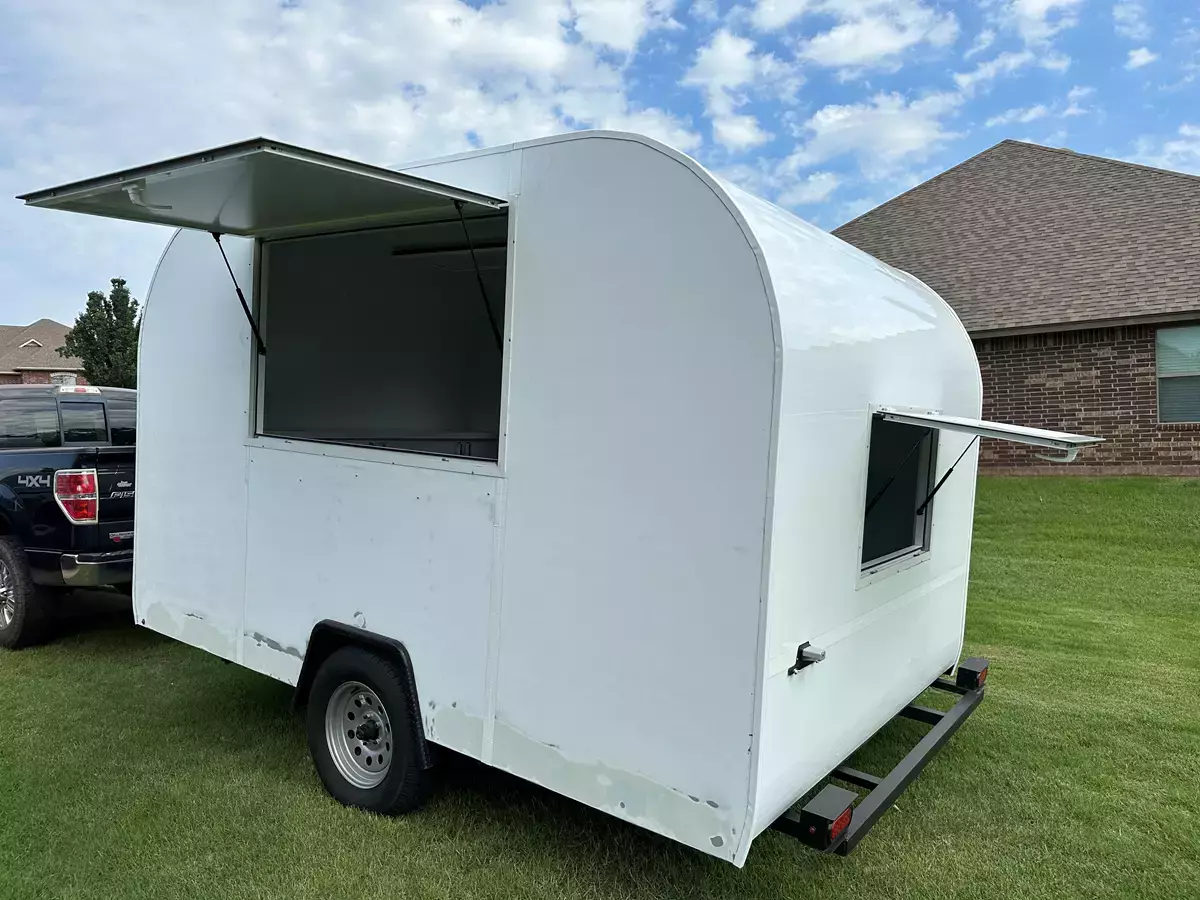
If you can find a retail trailer with a concession window already installed, your setup time at every fair drops further. The fold-down counter doubles as a transaction surface and as part of the booth's visual frame.
Plan Your Layout Before You Arrive
Sketch the interior layout on paper before opening day. Place high-margin items at eye level, group impulse purchases near the payment counter, and reserve the back wall for your most photogenic statement piece. Customers walk in, glance left to right, and make a quick stay-or-leave decision in under three seconds, so the entrance view matters most.
Keep aisles 36 inches wide. Anything narrower and customers brush past your displays; anything wider and you waste sellable space.
Lighting Inside the Trailer
Most enclosed trailers come with one or two dome lights, which is not enough for retail. Add LED puck lights or under-shelf strips along every display surface. Color temperature matters: 3000K to 3500K warm-white reads as cozy and product-friendly, while 4000K cooler tones work better for jewelry and fine crafts.
Run the lighting off a deep-cycle battery with an inverter if shore power is unavailable. Plan for 12 to 18 hours of runtime across a two-day fair to avoid mid-event dimming.
Signage That Pulls Foot Traffic
Exterior signage is the single biggest investment you should make in your trailer. A printed vinyl wrap costs $800 to $1,800 depending on size, but it pays back fast through brand recognition. If a wrap is not in the budget, large magnetic signs on both long sides are a fraction of the cost and removable.
Inside the trailer, every product display benefits from a small printed price card with the item name, price, and a short story line. Customers buy more when they understand the maker's intent.
What Drives Booth Sales Most
The chart below shows the percentage lift in booth revenue from each tactic, based on aggregated data from craft fair sellers across the United States.
NeighborsTrailer.com
Sampling and Live Demos
If your product allows it, demonstrate. A potter throwing a small bowl, a candle maker pouring a tester, a soap maker cutting a fresh bar in front of customers; demonstrations stop foot traffic faster than any other tactic. The trailer gives you space to set up a small demo station out of the weather without losing display room.
For edible products, sample portions should be small (less than one bite worth) and served on disposable picks or single-use cups. Confirm with the fair organizer that sampling is allowed on their lot before show day.
Payments and Pricing
Cash-only is a sales killer in 2026. Equip the trailer with a mobile card reader (Square, Stripe Terminal, or Clover Go), a tablet or phone running your POS app, and a backup paper receipt book. Have a pre-installed Wi-Fi hotspot in the trailer for fairs with poor cell coverage.
Price your items in round-dollar increments where possible; transactions move faster, and you avoid digging for coins. Display prices clearly; customers asking "how much is this" is a sign your signage is failing.
Setup and Booth Logistics
The table below summarizes the size of trailer you need for typical craft fair scenarios.
| Booth Size | Trailer Length | Display Surface | Best For |
| 10x10 ft | 8 to 10 ft enclosed | About 25 sq ft | Single seller, small inventory |
| 10x20 ft | 12 to 14 ft enclosed | About 50 sq ft | Solo seller, full season |
| 20x20 ft | 16 ft enclosed with concession window | About 80 sq ft | Two-person operation, large inventory |
| 20x40 ft | 20 ft enclosed | About 120 sq ft | Permanent vending business |
Weather Contingencies
A retail trailer is a huge advantage when weather turns. Rain that wipes out a tent-based booth has little effect on your sales when customers can step inside. Keep a removable awning attached over the side or rear door so people can enter without getting wet, and bring a small fan or portable heater for hot or cold days.
If a fair imposes a hard rain delay, use the trailer's enclosed space to organize, restock, and prep for the post-storm rush. Your competitors will be packing wet inventory while you stay dry.
Permits, Taxes, and Insurance
Most fairs require a vendor permit, a current resale or sales tax license, and a certificate of liability insurance with the fair organizer listed as additional insured. Confirm what your destination state requires for transient vendors before towing across state lines.
For longer-distance moves, the enclosed vs open trailer comparison covers the trade-offs in detail.
Frequently Asked Questions
What is the smallest trailer that works for craft fair selling?
An 8 foot enclosed cargo trailer is workable for a single seller with compact, lightweight products. Anything smaller becomes cramped fast.
Can I tow a retail trailer with a standard SUV?
An 8 to 12 foot enclosed cargo trailer is towable by most midsize and full-size SUVs. Confirm the trailer's gross weight against your vehicle's tow rating.
How much does a retail trailer rental typically cost?
Daily rates run $90 to $180 depending on size and features, with weekly rates that work out to roughly four times the daily.
Do I need a generator?
Only if shore power is unavailable at the fair. A 1,000 to 2,000 watt inverter generator covers lighting, a small heater, and your point of sale equipment.
Where do I park overnight between fair days?
Many fair venues allow secure overnight parking on-site. If not, RV parks and truck stops near the venue are reliable options.
Conclusion
A retail trailer turns a casual craft fair side hustle into a real business. Pick the right size, light it well, invest in signage, and lean into demos. The lift in sales over a folding-table booth pays back the rental in just a few weekends, and the professional impression compounds across the season.
Related Articles
- Benefits of Utility Trailers: Open vs Enclosed
- Parade Float Flatbed Trailer Rental
- Tips for Beginners on Towing a Large Flatbed Trailer Rental
- The Best Trailers for Fall: Hayrides, Pumpkin Patches and More
Content updated May 2026