

How To Safely Transport Fragile Items
 Neighbors Trailer .
May 28, 2024 561 7 min read Transporting fragile item
How to Safely Transport Fragile Items: A 2026 Guide for Movers, Sellers, and Collectors
Fragile transport is where good intentions meet bad physics. A 60-mile drive contains roughly 4,000 vibration cycles, a few sudden lane changes, at least one pothole, and a stop or two that converts forward momentum into very persuasive impact force. The boxes might look fine when you load them; the contents are negotiating with that force every single mile. The difference between a smooth delivery and a sickening crunch usually has less to do with luck and more to do with how the items were prepped, packed, secured, and driven.
This guide gives you the same playbook fine art handlers, antique dealers, and high-end e-commerce shippers use, scaled down for everyday moves and rentals. Whether you're hauling grandma's china, an espresso machine, a vintage record collection, or a delivery of glass shelving, the principles are the same.
What Counts as "Fragile" in Transport
Most damage claims involve items that weren't on anyone's fragile list. The real category is broader than glass:
- Anything ceramic or porcelain, including bathroom fixtures, planters, and kitchenware.
- Electronics with internal moving parts: hard drives, turntables, gaming consoles, kitchen appliances with motors.
- Pressure-sensitive items: musical instruments, vintage furniture with veneer, framed art.
- Liquids that can leak under sustained pressure: oils, paint cans, alcohol, cleaning products.
- Composite or layered materials that delaminate when shocked: cabinets, drawers, mirrors.
If it has a glass element, a moving part, or could absorb a shock and split later, prep it like fragile cargo.
The 5-Step Protection Method
Pros use a simple sequence. Skip a step and you create a weak link in the chain.
Step 1: Immobilize internal parts
For appliances, drawers, and electronics, tape moving parts so they don't slam during transport. Refrigerator shelves come out. Drawer fronts get masking tape. Lenses get retracted. Anything that can shift inside an object will shift during a 200-mile haul.
Step 2: Surround with cushioning
Wrap each item with at least two inches of cushioning material on every side. Bubble wrap works for medium items; foam pouches work for small ones; moving blankets work for furniture. The key is consistent coverage. Half-wrapped is worse than unwrapped because the unwrapped edge becomes the impact point.
Step 3: Box smart
Pick a box about two inches larger than the wrapped item in every dimension. Fill the void with crushed paper, foam peanuts, or air pillows. Shake the closed box gently. If you hear movement, add more fill. The contents should feel like one solid mass.
Step 4: Stack and segregate
Heavy boxes go on the bottom of the trailer. Fragile boxes go on top of stable, flat surfaces, never wedged between heavy items that could shift. Mark fragile boxes on all four sides plus the top. Drivers and helpers don't always see the top label first.
Step 5: Tie down and dampen
Use ratchet straps or cam buckles to hold the fragile stack against a wall or against a heavy, immobile load. Strap pressure should be firm, not crushing. Pad the strap-to-box contact point with a folded blanket so the strap doesn't dig into the cardboard.
Material Effectiveness at a Glance
Different materials shine in different roles. The chart below pulls from internal data on common rental moves and shows the average reduction in damage rate when each material is used correctly.
NeighborsTrailer.com
Packing Material Quick-Reference
This table summarizes the best uses, cost, and limitations of the materials most renters reach for.
| Material | Best Use | Approximate Cost | Watch Out For |
| Bubble wrap (medium) | Dishes, glassware, decor | $15 to $25 per 100 ft roll | Reusing flattened wrap loses cushion |
| Foam corner pads | Framed art, mirrors, monitors | $10 to $20 per pack of 8 | Must be tight on the corner |
| Air pillows | Void fill in boxes | $0.10 to $0.20 per pillow | Slow leak if punctured |
| Custom wood crate | One-of-a-kind, high-value | $80 to $300 each | Heavy; needs forklift or two people |
| Moving blanket | Furniture, appliances | $10 to $20 each, often included with rental | Slips off without straps |
| Foam edge protectors | Doors, glass, table edges | $3 to $8 per length | Needs tape or strap to stay put |
Choose the Right Trailer for Fragile Loads
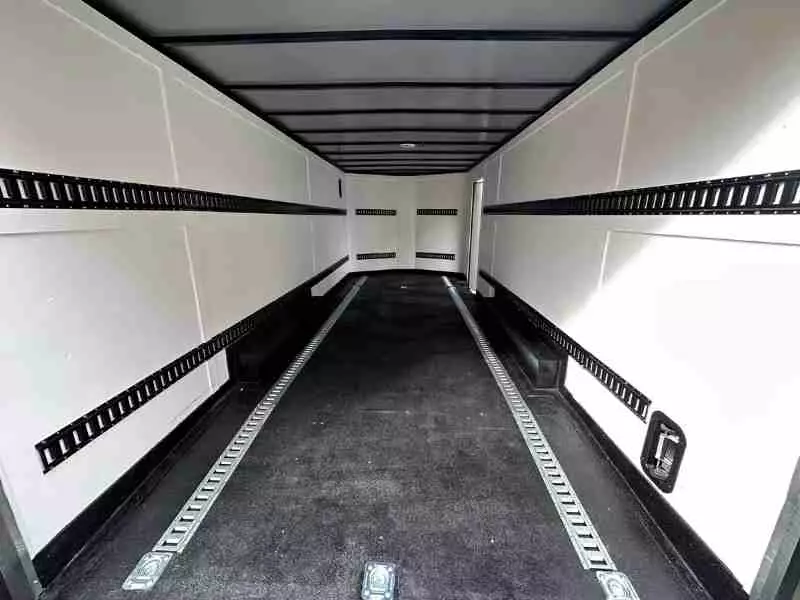
The trailer itself is part of the protection system. A flatbed with no walls offers no help. An open utility trailer exposes everything to road grit and rain. An enclosed cargo trailer is the standard choice because it shields cargo from weather, theft, and side-impact dust at highway speed. For long, low-vibration hauls, look for trailers with torsion axles and radial tires, which damp road shock better than leaf-spring axles with bias tires. A complete primer on locking down cargo lives in our guide to tiedowns for enclosed trailer rentals.
Driving Like a Fragile Load Is Behind You
Even perfect packing can be undone by aggressive driving. Three habits move the needle most:
- Smooth braking. Anticipate stops 200 feet earlier than you normally would. Hard braking shifts trailer cargo forward into stacks not designed for that force.
- Wide turns. Trailer wheels track inside the tow vehicle's path. Take corners slower and wider so the load doesn't roll into the trailer wall.
- Speed control on rough pavement. Vibration damage compounds. Reduce speed 5 to 10 mph over washboard, expansion joints, or gravel. Pothole impact at 60 mph is roughly double the impact at 45 mph.
Special-Case Fragile Items
Glass tabletops and mirrors
Move them on edge, never flat. A flat panel flexes with every bump and fails at the center. Edge-mounted glass with foam corner pads, secured against a padded wall, survives almost any drive.
Pianos and large instruments
These require professional movers for full uprights and grands. For smaller keyboards or guitars, ride them in the cab if possible. Trailer temperature swings can warp wooden instruments, particularly in cold weather.
Lithium-battery electronics
Power down completely. Heat plus vibration can wake some batteries into thermal runaway. Pack with foam separators between devices and store away from direct sunlight in the trailer.
Antique furniture with veneer
Cover the entire piece with moving blankets, then plastic stretch film. The blankets cushion; the film keeps the blankets from sliding off mid-drive. Don't strap directly over veneer. Pad the strap contact zone.
FAQs About Transporting Fragile Items
Should I use a closed or open trailer for fragile cargo?
Enclosed in almost every case. The wind, road debris, and weather exposure on an open trailer add risk that good packing alone can't offset. The premium for enclosed is small compared to the value of the cargo it protects. Read more on cargo trailer rental edge protection to dial in the setup.
How tight should ratchet straps be on fragile cargo?
Snug enough that the load doesn't shift when you push it, loose enough that you can slide a finger between the strap and the box at any point along the path. Over-tightening crushes corners.
Is bubble wrap better than foam peanuts?
For wrapping individual items, bubble wrap wins. For void fill inside a box, peanuts or air pillows are easier to pour and pack tightly around odd shapes. Most pros use both in combination.
Do I need insurance for fragile cargo?
Many rental marketplace bookings include built-in damage protection on the trailer itself. Confirm whether your own homeowner's or renter's policy covers the cargo while in transit. High-value or commercial freight often needs a dedicated cargo insurance rider.
What's the single most important thing to get right?
Immobilization. If items can shift inside a box or inside the trailer, they will, and every collision compounds the damage. Pack tight, strap tight, drive smooth.
The Bottom Line
Safely transporting fragile items isn't about owning specialty gear. It's about treating every layer as part of one system: the wrap immobilizes the item, the box surrounds the wrap, the trailer protects the box, and the driver protects the trailer. Skip a layer and the chain breaks. Build all four well, and most fragile cargo travels happily across town or across the country.
Related Articles
- 10 Best Ways to Transport Fragile Items
- A Complete Guide to Tiedowns to Secure Your Cargo in an Enclosed Trailer Rental
- Cargo Trailer Rental Edge Protection
- Essential Safe Towing Tips With a Cargo Trailer Rental
Content updated May 2026