

Benefits of an Enclosed Trailer Rental to Transport Your Car
 Neighbors Trailer
Sep 1, 2023 377 7 min read Enclosed trailer renta
When you need to move a vehicle across town or across the country, an enclosed trailer rental gives you something open transport and shipping services cannot match: complete control and total protection. Whether you are relocating a classic, delivering an auction buy, or towing a project car to the shop, hauling inside a sealed trailer protects your investment from weather, road debris, and prying eyes. This guide breaks down the real benefits, the cost picture, and how to choose the right setup for your next car haul.
Why an Enclosed Trailer Beats Open Transport for Cars
Open carriers and tow dollies have their place, but they leave your vehicle exposed. Every mile on an open trailer means another mile of gravel chips, rain, road salt, bird droppings, and dust grinding against your paint. For daily drivers that might be acceptable. For anything you actually care about, an enclosed trailer is the difference between arriving in showroom condition and arriving with a new detailing bill.
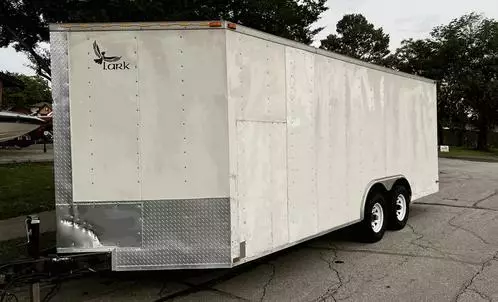
An enclosed trailer also keeps the vehicle completely out of sight. That matters more than most people think. Classic cars, high-value builds, and show vehicles attract attention everywhere they go, and that attention can turn into trouble at the wrong rest stop. A plain white box trailer, on the other hand, looks like any other piece of commercial equipment.
7 Key Benefits of Hauling Your Car in an Enclosed Trailer
1. Full Weather Protection
Rain, snow, hail, and UV exposure all take a toll on automotive finishes. Inside a sealed trailer, your vehicle stays dry and out of direct sunlight for the entire trip. This matters most for repainted cars, vinyl wraps, and soft convertible tops.
2. Protection from Road Debris
Highway driving kicks up stones, sand, and tar. Even a single rock strike can crack a windshield or chip clear coat. An enclosed trailer puts steel or aluminum walls between your paint and the road, eliminating stone chip risk entirely.
3. Theft and Vandalism Deterrence
A locked, windowless trailer is far harder to break into than a car sitting on an open deck. If your trip includes overnight stops, the peace of mind alone is worth the slight premium over open transport.
4. Privacy for Valuable or Unfinished Builds
Project cars, prototypes, and show vehicles often need to travel discreetly. An enclosed trailer keeps your build under wraps until you are ready to reveal it.
5. Storage for Parts and Tools
Heading to a track day, car show, or swap meet? An enclosed trailer doubles as mobile storage for wheels, tools, spares, and supplies, so you arrive with everything you need.
6. Professional Presentation
If you run a small dealership, restoration shop, or transport business, pulling up in a clean enclosed trailer signals that you handle inventory with care. Customers notice.
7. Better Resale and Insurance Value
Cars that stay protected accumulate fewer cosmetic issues over time. For collector vehicles in particular, the condition of the paint and trim directly affects resale value at auction.
Enclosed Trailer vs Open Transport: Quick Comparison
| Factor | Enclosed Trailer | Open Trailer / Dolly |
| Weather protection | Complete | None |
| Road debris protection | Complete | None |
| Theft deterrence | High | Low |
| Typical daily rental cost | $150 to $300 | $75 to $150 |
| Best for | Classics, show cars, long hauls | Daily drivers, short hops |
| Extra storage inside | Yes | No |
The premium for an enclosed trailer is real, but so is the value it delivers. For any vehicle worth more than a few thousand dollars, the math usually works in favor of the sealed option. If you are still weighing trailer formats, our car trailer rental vs tow dolly comparison walks through the trade-offs in more detail.
Cost Picture: Renting vs Professional Shipping
Hiring a professional car shipper typically runs $1.00 to $1.50 per mile for open transport and $1.50 to $2.50 per mile for enclosed transport. That adds up fast on a long move. Renting an enclosed trailer and towing the vehicle yourself usually cuts the out-of-pocket cost by 40 to 60 percent, especially on trips under 1,000 miles.
NeighborsTrailer.com
Choosing the Right Enclosed Trailer for Your Vehicle
Size and weight rating matter more than cosmetics. A compact car fits comfortably in a 16 foot enclosed trailer, while full-size pickups and SUVs need 20 to 24 feet. Always check the trailer deck length plus door opening height against your vehicle dimensions before booking. Interior width also matters: most cars need at least 82 inches of clear width to open the doors inside the trailer for loading and securing.
Tow vehicle capacity is the other half of the equation. An empty 20 foot enclosed trailer weighs around 3,000 pounds, and a typical car adds another 3,000 to 4,000. That puts you comfortably into half-ton and three-quarter-ton territory. If you are new to this weight class, our guide on choosing the right car trailer rental covers the fundamentals.
Preparing for Your First Enclosed Car Haul
The loading process is where most first-time haulers run into trouble. Use a spotter, take your time centering the vehicle on the deck, and always strap the car down at four points using rated ratchet straps or axle straps rather than looping over suspension components. Check tire pressure on both the tow vehicle and the trailer before you leave, and plan for wider turns and longer stopping distances.
Frequently Asked Questions
Do I need a special license to tow an enclosed car trailer?
Most states allow standard driver licenses for combinations under 26,000 pounds gross combined weight, which covers nearly every car-hauling setup. A few states require endorsements over specific thresholds, so check your local DMV before a long trip.
How much does it cost to rent an enclosed trailer for a car?
Rental rates vary by region and trailer size, but expect roughly $150 to $300 per day for a 20 to 24 foot enclosed trailer on a peer-to-peer marketplace. Weekly rates typically discount 20 to 30 percent off the daily rate.
Can my truck pull an enclosed trailer with a car inside?
It depends on your truck. A half-ton pickup with a proper tow package can usually handle a 20 foot enclosed trailer plus a mid-size sedan. Heavier loads, longer trailers, or SUVs typically require a three-quarter-ton or one-ton truck.
Is an enclosed trailer worth the extra cost over an open trailer?
For classics, show cars, or any vehicle you care deeply about, yes. For daily drivers on short local moves, an open trailer is usually fine.
What safety equipment should I bring?
Four rated ratchet straps or axle straps, wheel chocks, a breakaway cable check, a working brake controller if the trailer has electric brakes, and a spare tire for both the tow vehicle and the trailer.
Bottom Line
An enclosed trailer rental is the right tool any time the vehicle matters more than the price tag of the trip. You gain total weather and debris protection, serious theft deterrence, and the flexibility to pack tools and parts alongside the car. For classics, show vehicles, project builds, and long-distance hauls, the benefits consistently justify the slight premium over open transport. If you only need to move a daily driver ten miles across town, an open trailer is still a reasonable pick. For everything else, roll closed.
Related Articles
- Car Trailer Rental vs Tow Dolly: Which Is Right for You?
- Classic Car Transport: Choosing the Right Car Trailer Rental
- Beginner's Guide to Choosing the Best Enclosed Trailer Rental
- Beginner's Guide to Choosing the Right Car Trailer Rental
Content updated April 2026