

Why You Should Use a Dump Trailer Rental for Roofing Work
 Neighbors Trailer
Sep 16, 2023 641 9 min read Dump trailer ren
Roofing contractors know the difference a well-stocked job site makes. Tear-off debris piles up fast, time on the clock is money, and the ability to move waste in and out of a site without delay can make or break a weekly schedule. A dump trailer rental turns a messy part of the job into a smooth, predictable routine, whether you are tearing off asphalt shingles on a small ranch or hauling off torn metal panels from a commercial warehouse.
This guide explains how a dump trailer rental supports modern roofing work, what to look for when you book one, and how crews can reduce disposal costs while staying on schedule. If you are comparing options and want a deeper breakdown, our side by side comparison of dump trailer rental, junk disposal services, and dumpster rental is a useful companion read.
Why Roofing Crews Rely on Dump Trailer Rentals
Roof replacements produce heavy, bulky, and often sharp waste. A typical 2,000 square foot tear off can generate several tons of shingles, nails, underlayment, and old flashing. Our roofing shingle debris calculator estimates that tonnage from your roof size and layer count so you can size the trailer and budget the dump fee. Moving that volume in a pickup bed is slow and hard on the truck, and stationary dumpsters tie the crew to whatever footprint the delivery driver chose when the box was set down.
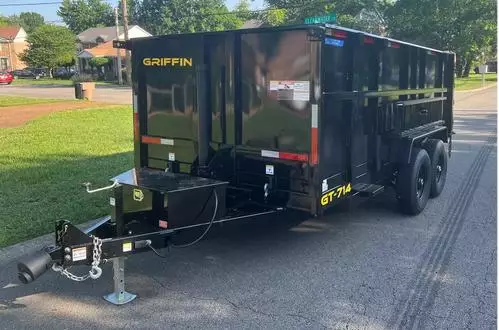
A dump trailer rental combines the mobility of a pickup with the hauling capacity of a small dumpster. The trailer stays hitched so crews can reposition it throughout the day, the hydraulic lift empties the bed in seconds at the transfer station, and there are no delivery or pickup windows to coordinate with a third party.
Speed, Cleanliness, and Site Control
On a roofing job, clean up pace often determines whether the project ends on a Friday or slips into the weekend. When debris can be thrown directly from the roof into a dump trailer parked beside the house, the crew avoids the shuttle step of loading wheelbarrows into a truck or carrying bundles to a far corner of the lot. Fewer touches of the waste means lower labor cost and fewer trip hazards on the ground.
Choosing the Right Dump Trailer Size for Your Roof
Matching trailer capacity to project size keeps you from making unnecessary trips or, worse, overloading the trailer. Roofing waste is dense, so weight capacity matters more than visible volume. The table below gives rough planning numbers for common residential roof types and sizes.
| Roof Size | Shingle Weight Estimate (lbs) | Recommended Trailer | Typical Trips to Dump |
| 1,200 sq ft ranch | 2,400 to 3,600 | 6x10 dump trailer | 1 |
| 2,000 sq ft two story | 4,000 to 6,000 | 7x12 dump trailer | 1 to 2 |
| 3,000 sq ft home | 6,000 to 9,000 | 7x14 heavy duty dump | 2 |
| Small commercial flat roof | 8,000 to 12,000 | Tandem axle dump trailer | 2 to 3 |
Always check the gross vehicle weight rating of the trailer against the expected load. Asphalt shingle bundles weigh roughly 60 to 80 pounds each, and a full pallet of new shingles on top of tear off waste can push a trailer over its limit faster than a visual check would suggest.
Waste Disposal Becomes a Planned Step, Not a Scramble
Without a dedicated trailer, roofing waste tends to stack up on lawns, driveways, and in the backs of pickups. That creates pressure to find a disposal solution on the fly, which usually costs more. Booking a dump trailer rental for the full length of the job turns waste handling into a planned step, with a known cost and a fixed schedule.
For spring tear off season, when demand spikes, many owners book trailers well in advance. Our post on why a dump trailer rental is perfect for spring cleaning walks through how to plan ahead so your crews are never sitting idle waiting for a disposal truck.
Tear Off Waste Varies by Material
Not all roofing waste is equal. Asphalt shingle tear offs are dense and heavy, while metal panels are lighter but awkward. Tile roofs generate some of the heaviest debris pound for pound. Planning trailer capacity around the material you are pulling off saves trips and keeps tow vehicles from working overtime.
NeighborsTrailer.com
Features That Matter on a Roofing Job Site
Not every dump trailer is built for tear off work. Look for features that speak directly to roofing needs, such as reinforced sides, a smooth hydraulic lift, and ramps that can handle a wheelbarrow or a small skid steer if you are clearing debris from the yard. Many crews also benefit from scissor lift trailers that raise the bed high enough to clear the sides of a high dump trailer at the transfer station.
Upgrades Worth Asking About
Trailer owners in our marketplace often add features that make life easier on a roofing site, such as tarp kits to keep debris secured on the highway, D rings for tying down pallets of new material, and rear barn doors for easier loading. Our guide on ways you can upgrade your dump trailer walks through what to look for when comparing listings.
Booking a Dump Trailer Through a Peer to Peer Marketplace
Renting through a marketplace like Neighbors Trailer lets you compare dump trailers from local owners, read real reviews, and lock in pricing transparently. You can match trailer size to job size without committing to the size of a commercial dumpster. The platform handles the contract, payment, and scheduling, so you only need to focus on getting to the job on time.
All bookings require renters to be at least 21 years old and include coverage automatically at checkout, so your crew is not scrambling to line up extra insurance on the morning of a tear off.
Tracking Disposal Fees and Tipping Costs
One overlooked factor that can quietly inflate the cost of a roofing job is the dump fee at the local landfill or transfer station. Tipping rates for shingle waste vary widely by region, with most facilities charging by the ton rather than by the load. Our dump sites locator maps nearby landfills and transfer stations that accept shingle waste along with their hours. Before you book a dump trailer rental, call the nearest two or three transfer stations and ask for their current asphalt shingle disposal rate. Some sites charge a flat fee for asphalt and a higher rate for tear-off mixed with felt or wood, while others offer a recycling discount when shingles are kept separate from general construction debris. Building these per-ton numbers into your bid sheet keeps the disposal line item from eating into your margin halfway through a job.
Roofing crews who run multiple jobs a week often save real money by syncing dump trailer pickups with their disposal runs. Instead of making one trip per day with a half-loaded trailer, plan your tear-off schedule so you can fill the trailer to its rated capacity, then make a single dump run at the end of the day. This cuts fuel use, reduces wear on the tow vehicle, and lowers the per-square cost of waste removal across the project. A peer-to-peer dump trailer rental gives you the flexibility to keep the trailer onsite for the full week if needed, which is rarely possible with a traditional dumpster delivery that locks you into a fixed pickup window.
Frequently Asked Questions
How long should I rent a dump trailer for a roofing project?
Most small residential roof replacements need the trailer for two to three days. Larger homes and commercial flat roofs may call for a week. Booking the full window up front is usually cheaper than extending day by day and protects you if weather pushes the schedule back.
Can I leave the trailer loaded overnight on the job site?
Yes, as long as the homeowner or property manager approves and the trailer is chocked, tarped, and visible. Most roofing crews load during the day and make one trip to the transfer station either mid job or at the end, depending on trailer size and waste volume.
What about nails and sharp debris?
Dump trailers with steel decks handle roofing nails and broken shingles without issue. Use a magnet sweep on the lawn after unloading to catch the nails that miss the bed, and ask the owner whether the trailer has a smooth floor liner if you want to minimize cleanup between jobs.
Is a dump trailer cheaper than a dumpster rental?
For most tear off projects the answer is yes, especially when the job runs more than one day. Dumpsters typically charge a flat delivery plus tonnage, while dump trailers bundle the cost into a daily rate and remove the separate disposal fee since you drive waste directly to the transfer station.
Do I need a special truck to tow a dump trailer?
A 3/4 ton pickup with a proper hitch and brake controller is enough for most single axle dump trailers. Tandem axle heavy duty models may require a 1 ton truck or a diesel, especially when loaded with shingles or tile.
Make Tear Off Day the Easiest Day of the Job
Roofing is hard work, and the hours after the last shingle hits the ground should not be spent chasing down disposal trucks. A properly sized dump trailer rental, booked for the length of the project, turns cleanup into a smooth, routine step. Crews work faster, sites look more professional, and homeowners get their yards back in usable shape at the end of the day.
Related Articles
- Dump Trailer Rental vs Junk Disposal vs Dumpster Rental: Which Is Best?
- Dump Trailer Rental Upgrades Worth Asking About
- Dump Trailer Rental Tips for Spring Cleaning Jobs
- Easy Waste Disposal With a Dump Trailer Rental
Content updated April 2026