

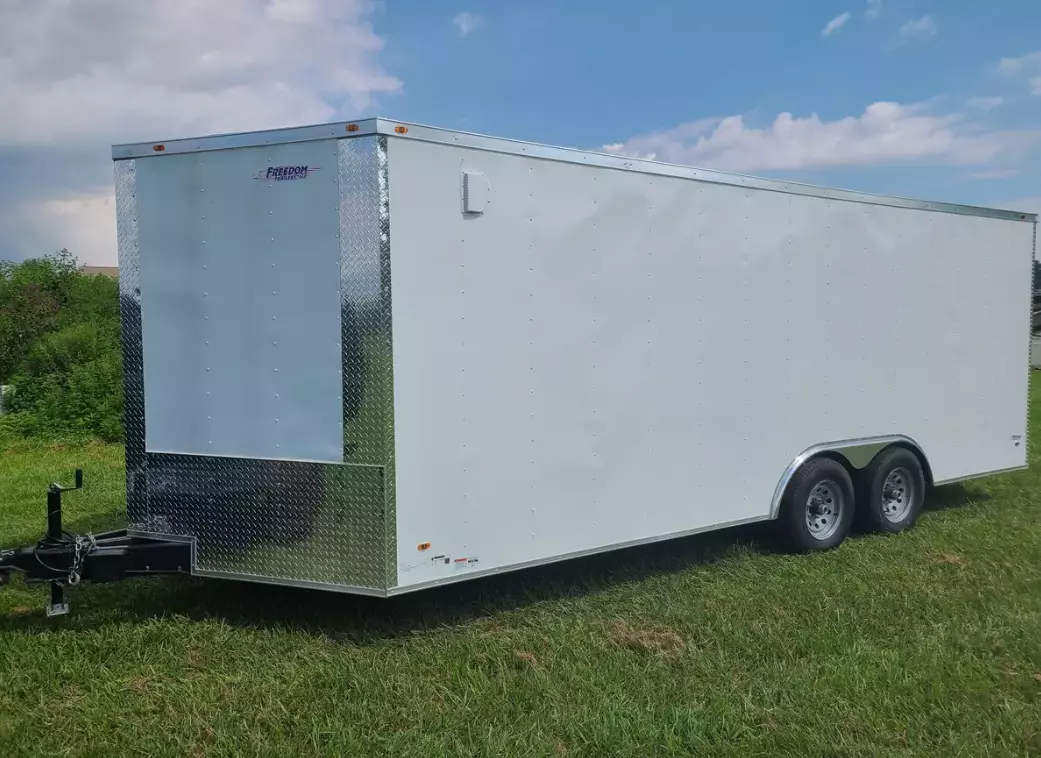
Understanding Slipper Spring Suspension on a Cargo Trailer
 Neighbors Trailer
Dec 11, 2023 711 8 min read Cargo Trailer Renta
Cargo trailer suspensions usually get noticed only when something feels wrong. A clunk on the highway, a tire wearing unevenly, or a load that shifts more than it should. The component doing most of the work underneath many cargo trailer rentals is a humble piece of curved steel called a slipper spring. It is simple, durable, and built for heavy hauling, which is exactly why so many cargo trailer owners on Neighbors Trailer choose it.
This guide breaks down how slipper spring suspension works on a cargo trailer, where it shines, where it falls short, and how to keep it riding well for years. Whether you rent your trailer out or take one to a job site, understanding the suspension keeps the load safer and the trailer in service longer.
What Slipper Spring Suspension Actually Is
A slipper spring is a multi-leaf spring with one end formed into a closed eye and the other end shaped into a flat, tapered tongue. The eye end bolts to a fixed hanger on the trailer frame. The tapered end rests on a sliding hanger surface, sometimes called the slipper pad, where it can move forward and backward as the spring flexes. That sliding action is the key difference between slipper springs and double-eye springs.
Because the slipper end has no shackle and no second eye, the design is mechanically simple. Fewer pivot points means fewer wear items, but it also means that all the flex happens at the slipper pad and the front eye bushing. Those two contact areas need to be inspected and lubricated more often than people expect.
How a Slipper Spring Cycles Under Load
When a tire hits a bump, the spring pack compresses, the tapered end slides slightly along the slipper pad, and the curve of the spring flattens. As the wheel drops back into place, the spring rebounds and pushes the trailer back to ride height. The whole cycle happens in a fraction of a second and absorbs most of the road impact before it reaches the cargo.
The trade-off is noise. Steel sliding on steel produces an audible scrape on rough roads, especially when the slipper pad surface gets dry. A small amount of marine-grade grease quiets things down for thousands of miles.
Why Cargo Trailer Owners Choose Slipper Springs
The biggest reason is load capacity. Slipper spring axles in the 5,200 to 7,000 pound range are widely available, and tandem setups easily handle 10,000 to 14,000 pound gross loads. Few suspension styles match that for the price.
The second reason is part availability. Hangers, U-bolts, equalizers, and replacement spring packs are stocked at most trailer parts stores. Repair times stay short, which matters when a trailer is generating rental income or sitting on a job site.
| Spring Spec | Typical Cargo Trailer Match | Axle Rating | Number of Leaves |
| 3 leaf 25 inch | Single 3,500 lb axle, light cargo | 3,500 lb | 3 |
| 4 leaf 25 inch | Single 5,200 lb axle, medium cargo | 5,200 lb | 4 |
| 5 leaf 25 inch | Single 6,000 lb axle, mid heavy cargo | 6,000 lb | 5 |
| 6 leaf 26 inch | Tandem 7,000 lb axles, contractor cargo | 7,000 lb each | 6 |
| Heavy duty 7 leaf | Tandem 8,000 lb axles, work fleet | 8,000 lb each | 7 |
Use this table when sourcing replacements. Mixing leaf counts between sides causes uneven ride height and accelerates wear on the lighter side.
How Slipper Springs Compare to Other Cargo Trailer Suspensions
The chart below scores slipper springs against the three other suspension styles you will see most often on cargo trailers. Higher numbers are better for load rating; lower numbers are better for service cost and noise.
NeighborsTrailer.com
Slipper springs win on load capacity and serviceability. Double-eye springs ride a bit smoother. Air bag helpers add adjustability for varying loads but add complexity. Torsion axles deliver the smoothest ride but cost more and are harder to service in the field. For a deeper comparison see our leaf spring vs torsion axle guide.
Slipper Spring Maintenance Schedule
A slipper spring suspension rewards a simple, regular service routine. Skip it and you will hear about it as creaks, clunks, and uneven tire wear.
Every 3,000 miles or quarterly, lubricate the slipper pad and the front spring eye bushing with a marine-grade grease. Wipe off any old grease before applying new product so grit does not get pressed back in. Check that all U-bolts are torqued to the manufacturer specification, usually between 90 and 130 foot pounds. Loose U-bolts allow the axle to shift, which leads to dog tracking and faster tire wear.
Twice a year, jack each side and inspect the spring pack for cracked leaves, missing center pins, or rust scaling between leaves. Look for visible wear or grooving on the slipper pad surface. A worn pad should be replaced; running on a damaged pad chews through the tapered end of the spring quickly.
Common Slipper Spring Problems and Fixes
Several issues come up often enough that they are worth listing in plain English.
One side sagging is usually a broken or fatigued leaf, sometimes a missing center pin. Replace the affected spring pack as a unit. Loud creaking points to a dry slipper pad or a worn shackle bushing on the eye end; clean and re-grease, replace bushings if needed. A clunk over bumps usually traces back to a loose U-bolt or a worn equalizer on a tandem setup. Cupping tire wear that does not respond to alignment usually points to a worn front bushing letting the axle wander under load.
If you rent your cargo trailer through a peer-to-peer platform like Neighbors Trailer, document each service in a simple log. Renters appreciate seeing recent maintenance, and a paper trail protects you if a renter raises a question after their booking. Our cargo trailer leaf spring guide includes a printable maintenance checklist you can keep with the trailer.
When to Upgrade or Rebuild
If your cargo trailer regularly carries loads near or above its rated capacity, consider upgrading to a higher leaf count or a heavier axle pair. Repeated overloading flattens leaves prematurely and can crack the front spring eye. If the trailer mostly runs light loads, downgrading is rarely worth the cost; the existing suspension simply lasts longer.
A full rebuild on a tandem axle slipper setup with new springs, U-bolts, hangers, and bushings typically runs $400 to $900 in parts. That is a fraction of the cost of switching to torsion axles, and it returns the trailer to factory ride quality.
Frequently Asked Questions
How long do slipper springs last on a cargo trailer?
With regular service, slipper springs commonly last 60,000 to 100,000 miles. Heavy or chronic overloading shortens that, and salty winter roads accelerate corrosion. A pack that has visible cracks, missing center pins, or unequal arch should be replaced.
Are slipper springs noisier than double-eye springs?
Yes. The sliding action at the slipper pad creates a metallic scrape that double-eye springs do not have. Regular grease quiets it, and most owners stop noticing after a few miles. If noise is a deal breaker, double-eye or torsion axle setups run quieter.
Can I convert slipper springs to double-eye springs?
Sometimes. The conversion requires changing the rear hanger to a shackle hanger and using double-eye springs that match the axle. Trailer model and frame design dictate whether it is practical. Most cargo trailers are easier to rebuild with new slipper components than to convert.
How often should I grease slipper spring suspension?
Every 3,000 miles or quarterly, whichever comes first. Trailers used in salt or sand benefit from monthly attention.
Do slipper springs need shock absorbers?
Most factory cargo trailers do not include shocks because the multi-leaf pack provides damping on its own. Aftermarket shocks help on heavily loaded long-distance hauls but are not required.
Bottom Line
Slipper spring suspension is the workhorse of the cargo trailer world. It carries heavy loads, costs less to maintain than torsion axles, and uses parts you can find anywhere. A small amount of grease and twice yearly inspection keeps it riding well for years. If you list a cargo trailer on Neighbors Trailer, a healthy slipper spring suspension is one of the simplest ways to keep renters happy and bookings consistent.
Related Articles
- The Ultimate Guide to Leaf Spring vs Torsion Axle Suspension Systems
- Cargo Trailer Leaf Spring Guide
- Enclosed Trailer Suspension Guide
- Utility Trailer Suspension Review
Content updated May 2026